
GENERAL TERMS FOR INTERNATIONAL
Spring Airlines(9C) GENERAL TERMS AND CONDITIONS FOR CARRIAGE OF PASSENGERS & BAGGAGE
Spring Airlines(9C) Ticket Usage Conditions of Spring Airlines
Spring Airlines(9C) Instructions on the Carriage of Special Passengers (Domestic)
Spring Airlines(9C) Instructions on the Carriage of Special Passengers (International)
Spring Airlines(9C) Restrictions on the Carriage of Baggage
GENERAL TERMS AND CONDITIONS FOR CARRIAGE OF PASSENGERS & BAGGAGE OF SPRING AIRLINES CO., LTD.
Article 1 General Provisions
1.1 General
In order for Spring Airlines Co., Ltd. (hereafter referred to as “Spring Airlines”) to establish and maintain the normal order of passengers and baggage during domestic, international and regional carriage, improve its transportation management, protect the legitimate interests of passengers, Spring Airlines and other stakeholders, the General Terms and Conditions for Carriage of Passengers and Baggage (hereafter referred to as “these Terms”) have been developed according to relevant laws, regulations, rules and normative documents.
1.2 Scope of Application
1.2.1 Basic Principles
1.2.1.1 Unless otherwise stipulated in 1.2.1.3, 1.2.2 and 1.2.3 of these Terms, these Terms shall apply to public air services provided by Spring Airlines for the non-free carriage of passengers and baggage by civil aircraft. These Terms shall constitute part of the contract of carriage between Spring Airlines and passengers, and the rights, obligations and liabilities of both parties shall be governed by these Terms.
1.2.1.2 For contents subject to frequent changes set forth in these Terms, Spring Airlines has separately formulated documents including the Instructions on the Carriage of Special Passengers and the Terms of Using Passenger Tickets, all of which shall be deemed an integral part of these Terms. In the event of any inconsistency between the aforesaid documents and these Terms, the separately formulated documents shall prevail.
1.2.1.3 For free and special fare carriage, the corresponding special fare rules shall apply first. If there are no corresponding rules or no provisions, the relevant clauses hereof shall apply.
1.2.2 Chartered Carriage
Regarding the carriage operated in accordance with Spring Airlines’ chartering agreements, these Terms are only applicable to the circumstances where they are quoted in chartering agreements or the terms of chartering tickets.
1.2.3 Code Sharing Carriage
Subject to the agreements on code sharing between Spring Airlines and other carriers, these Terms only apply to the code sharing flights actually run by Spring Airlines.
Spring Airlines and the code-sharing flight’s actual carrier may have different terms and conditions, including but not limited to: boarding regulations, regulations on refusal of transport and restrictions on transport, baggage transport regulations, flight overbooking regulations, and regulations on flight delays, cancellations, diversions, etc.
1.3 Language Versions
These Terms are drafted in Chinese and translated into other language versions. In the event of any inconsistency between the Chinese version and other language versions, the Chinese version shall prevail.
1.4 Other Provisions
The heading of each clause in these Terms is for convenience of reference only and shall not be used for the interpretation of the content of the clause.
Article 2 Special Conditions of Carriage
2.1 Restriction on Carriage
2.1.1 Passengers who need special care or who may be carried only under specific conditions, such as accompanied minors/infants, unaccompanied minors/infants, sick or disabled passengers, pregnant women, blind persons, deaf‑mute persons, prisoners or criminal suspects, are classified as passengers with restricted transport, and must comply with relevant transportation regulations of Spring Airlines and shall obtain prior consent from Spring Airlines with necessary arrangements made. The relevant carriage rules shall be subject to the Instructions on the Carriage of Special Passengers separately formulated by Spring Airlines, which constitute an integral part of these Terms. In case of any inconsistency between the Instructions and these Terms, the provisions of the Instructions shall prevail.
2.1.2 Conditions of Carriage for children and infants
(1) Children and infants under 5 must be accompanied by adults over 18 with full capacity for civil conduct.
(2) Children aged at 5-12 who fly alone must apply with Spring Airlines for the flight procedures for unaccompanied children, and can only purchase tickets and take the plane with the consent of Spring Airlines.
(3) Spring Airlines does not carry infants less than 14 days old or premature infants less than 90 days old.
(4) The above age is calculated by the date of flight.
2.1.3 Number of Restricted Passengers: For safety concerns, Spring Airlines sets a limit on the number of passengers for every flight based on aircraft model. Currently, the upper limit for the number of restricted passengers on Airbus A320/A321 is 5.
2.2 Refusal of Carriage
Spring Airlines may refuse to transport for safety concerns or based on reasonable judgment in any of the following circumstances:
2.2.1 Passengers who violate applicable laws, regulations, orders and other provisions of the countries or regions of the place of departure, stopover, destination or overflight.
2.2.2 Passengers who refuse to undergo screening, or whose checked or carry‑on baggage has not undergone screening.
2.2.3 Passengers whose documents and tickets do not meet the requirements, including:
(1) Passengers who fail to present valid identity documents and valid travel documents or who may be repatriated en route due to failure to confirm connecting flights.
(2) Passengers who hold invalid tickets, illegally obtained tickets or forged tickets, or fail to pay the applicable fare, taxes, fees, etc.
2.2.4 The passengers’ behavior, age, mental or physical condition is not suitable for air travel, including:
(1) Passengers who are not conscious or unable to restrain themselves due to physical discomfort during check-in;
(2) Passengers who are intoxicated with alcohol, narcotics, or drugs resulting in a loss of self-control that clearly brings displeasure or disgust to other passengers during air travel;
(3) Psychiatric patients or intermittent psychiatric patients during the course of the illness;
(4) Passengers unfit for air travel due to injury or illness, as diagnosed by the airport medical institution or assessed on‑site by ground handling personnel;
(5) Pregnant women whose gestational weeks cannot be confirmed or who are judged unfit to fly by the check-in agent;
(6) Passengers who are unable to take care of themselves due to injury, illness, infirmity or mental condition, without a dedicated companion during travel, or whose companion is unable to independently assume the responsibility of care and supervision;
(7) Passengers suffering from or suspected of suffering from infectious diseases that pose a direct threat to the health of other passengers or crew members;
(8) Passengers with peculiar odors or special eccentricities that may cause discomfort to other passengers.
2.2.5 Baggage not meeting transportation requirements, including:
(1) A passenger carries items prohibited or restricted by the state, dangerous goods, or items liable to soil or damage the aircraft, and refuses the persuasion.
(2) The checked baggage of a passenger exceeds the weight or size limits specified by Spring Airlines, and the passenger refuses to split it for transportation.
(3) The baggage has abnormal odor or has already decomposed, and the passenger refuses the persuasion.
(4) A passenger carries unapproved police equipment, weapons or controlled knives.
(5) A passenger refuses to pay applicable excess baggage fees.
2.2.6 Passengers refusing to comply with exit seat restriction instructions issued by crew members or authorized Spring Airlines staff in accordance with Spring Airlines’ regulations.
2.2.7 Passengers with physical disabilities for whom the only suitable seat is an exit seat.
2.2.8 The passenger is a person with disabilities subject to quantity limits, but the number of such passengers carried on the flight has reached the limit.
2.2.9 Passengers failing to comply with Spring Airlines’ regulations, unwilling or refusing to follow the arrangements and advice of Spring Airlines staff.
2.2.10 Spring Airlines shall not refuse to carry a passenger solely on the ground that the passenger needs assistance from others to evacuate quickly to an exit in an emergency, which may be detrimental to flight safety. However, this shall not apply under the following circumstances:
(1) The passenger fails to inform the Company of such assistance needs in advance in accordance with its regulations;
(2) The Company is unable to make necessary assistance arrangements for the passenger on the flight in accordance with its assisted evacuation procedures.
2.2.11 Passengers endangering aircraft safety, or with words, motives or behaviors threatening flight safety, or who have committed any act that may endanger the safety of the aircraft or passengers on board during air transport, and the Company has reasonable grounds to believe that such situation may reoccur.
2.2.12 Passengers restricted from air travel pursuant to 2.1 hereof.
2.2.13 Other circumstances stipulated by laws, regulations or these Terms.
2.3 Arrangements for rejected passengers
Spring Airlines will arrange the rejected passengers according to the following rules:
2.3.1 Tickets of passengers who fall under the circumstance described in 2.2.4 hereof will be handled as involuntary refund described in these Terms.
2.3.2 Unless otherwise stipulated by the state, tickets of passengers who fall under the circumstance described in other paragraphs of 2.2 hereof will be handled as voluntary change or refund described in these Terms.
2.3.3 Unless otherwise stipulated by the state, the carrier shall promptly provide written explanation to the passenger who has purchased the ticket but is refused due to the reasons described in 2.2 hereof.
2.4 Travel Risks and Liability
Passengers shall confirm on their own whether their state of health is suitable for air travel. If a passenger suffers a sudden incident during the flight due to his/her own health reasons, resulting in the carrier taking necessary measures (including but not limited to diversion, emergency medical treatment, etc.) to ensure flight safety or public order, the carrier shall have the right to recover the additional expenses incurred therefrom from the passenger or his/her relevant liable party in accordance with the law. If a passenger knows that he/she is unfit for air travel but still purchases a ticket and travels by concealment, false statement or other improper means, thus constituting a breach of contract, he/she shall compensate the carrier for all losses suffered thereby (including but not limited to the aforesaid additional expenses, flight delay losses, etc.); if the act constitutes a crime, the case shall be transferred to the judicial organ for handling in accordance with the law.
Article 3 Passenger Tickets
3.1 General Provisions
3.1.1 Passenger tickets are the preliminary evidence for the formation of carriage contract between Spring Airlines and the passenger specified on the passenger tickets. Passenger tickets are automatically generated and stored as electronic records in Spring Airlines’ computer system. When an air transport contract is fulfilled, the respective responsibilities and rights of Spring Airlines and the passenger shall only apply to situations agreed in the single air transport contract.
3.1.2 After the passenger provides the information needed and is accepted by Spring Airlines, the reservation is established; once the payment is made, Spring Airlines’ computer system will record the information and generate an electronic record, and the carriage contract takes effective. Unless there is evidence to the contrary, the aforesaid carriage contract shall come into force at the time when the passenger ticket is issued.
3.1.3 Passenger ticket is nominative. Only the passenger named on the ticket has the right to request for carriage service.
3.1.4 Passenger tickets are non-transferrable, unless otherwise stipulated by Spring Airlines.
3.1.5 Passengers may apply for the issuance of itinerary as reimbursement voucher and as evidence of the passenger ticket.
3.1.6 Requirements for Using Passenger Tickets
3.1.6.1 Passenger holding an electronic ticket may not be checked in unless he or she shows the same valid ID used at the time of booking.
3.1.6.2 Connecting tickets must be used in order starting from the place of departure per the route listed on the passenger ticket.
3.1.6.3 Passengers must use the tickets in line with the flight information listed on the ticket, and abide by the check-in procedures, boarding procedures and on-board behavior requirements.
3.1.7 Spring Airlines has separately formulated the Terms of Using Passenger Tickets, which are regarded as part of these Terms. If the contents of the abovementioned provisions are inconsistent with these Terms, the former shall take precedence over the latter.
3.2 Ticket Validity
3.2.1 The passenger ticket shall be valid for one year from the date of actual departure; all the unused tickets are valid for one year from the date of issuance. The validity period of a changed ticket shall be calculated according to the date of original issuance or the actual date of departure.
3.2.2 Ticket validity starts as of the day the journey begins or zero o’clock the day after the passenger tickets are issued to zero o’clock the day after the expiration date.
3.3 Loss of E-ticket Itinerary
3.3.1 Loss of Itinerary
3.3.1.1 In the event that the e-ticket itinerary is lost or damaged, the passenger who needs to apply for a refund should report the loss to Spring Airlines in writing.
3.3.1.2 Passengers need to present their valid IDs when reporting their loss; if the applicant is not the passenger himself or herself, valid IDs of both the passenger and the applicant, other materials and certificates required by Spring Airlines as well as a written application must be presented.
3.3.1.3 In the event that the passenger lost the itinerary, and the printed itinerary was lost due to the passenger’s reason, it can’t be re-printed according to the Administrative Measures for Airline E-ticket Itinerary. If the passenger loses the e-ticket itinerary, he or she does not have to re-purchase the ticket and may complete his or her journey with a valid ID.
3.3.1.4 Passengers shall contact Spring Airlines again for a refund and pay the corresponding refund fee within 7 working days to 3 months after submitting the refund application.
3.3.2 Termination of Ticket Loss
3.3.2.1 Any passenger who finds the original copy of his or her itinerary within the period of validity after reporting his or her loss and having not refunded may go to Spring Airlines’ ticket office or contact its customer service for termination of ticket loss and handle the refund procedure after returning the itinerary.
Article 4 Ticket Price & Taxes
4.1 Applicability of Ticket Price
4.1.1 Ticket Price
4.1.1.1 Refers to the price of air transport for a passenger from the airport of departure to the airport of destination, excluding the cost of ground transport services within the airport area, between terminals, between airports or between airports and urban areas, and excluding other taxes and fees such as the Civil Aviation Development Fund, fuel surcharges and other taxes and fees.
4.1.1.2 Ticket price is the applicable price when any passenger purchases his or her ticket. After a passenger purchases the ticket, if the fare is adjusted, the fare of the ticket already purchased by the passenger shall remain unchanged. If the passenger needs to change any content in the itinerary, including travel date, flight, etc., supplementary fare and taxes may be collected.
4.1.1.3 Tickets of different fares involve different change and refund restriction clauses. Passengers may choose the fare type according to their own needs and abide by the corresponding rules when changing or refunding tickets.
4.1.2 Taxes and Fees
4.1.2.1 Taxes and fees charged by the government or relevant authorities as well as fees that the airport operator or carrier charges upon approval of the government or relevant authorities are not included in passenger ticket price. Such taxes or fees shall be paid by passengers.
4.1.2.2 Fuel surcharges and the Civil Aviation Development Fund are published and charged by the carrier in accordance with national regulations.
4.1.2.3 Spring Airlines will inform passengers of the taxes and fees included in the ticket price while they are purchasing tickets. Taxes and fees will be generally collected according to the taxes and fees released at the time of ticket purchasing and, unless otherwise required, taxes and fees collected will remain unchanged after the sale of the passenger ticket in the event of adjustments to taxes and fees.
4.2 Special Fare
4.2.1 Disabled Veterans, the People’s Police Officers and Fire Rescue Personnel
4.2.1.1 Disabled veterans, disabled people’s police officers and disabled fire and rescue members may purchase tickets at 50% of the regular adult fare for the same domestic flight of Spring Airlines by showing their Disabled Military Personnel Certificate of the People’s Republic of China, Disabled People’s Police Certificate of the People’s Republic of China, and Disabled Fire and Rescue Personnel Certificate of the People’s Republic of China respectively.
4.2.1.2 Disabled veterans, disabled people’s police officers and disabled fire and rescue members are allowed to purchase the passenger tickets at other fares, but they shall comply with corresponding use conditions.
4.2.2 Children Fare
4.2.2.1 The fare for children on domestic flights carried by Spring Airlines will be 50% of the adult fare if the adult fare is equal to or higher than 50% of the regular fare. If the adult fare is less than 50% of the regular fare, the children fare can be kept in line with the adult fare and there will be a seat for the children.
4.2.2.2 Children are charged 75% of the adult fare on international and regional flights carried by Spring Airlines, with seats provided.
4.2.3 Infant Fare
4.2.3.1 The fare for infants on domestic flights carried by Spring Airlines will be 10% of the adult fare if the adult fare is equal to or higher than 50% of the regular fare. If the adult fare is less than 10% of the regular fare, the infant fare can be kept in line with the adult fare and there will be no seat for the infant.
4.2.3.2 The fare for infants on the international and regional flights carried by Spring Airlines shall be charged according to the applicable rate published by Spring Airlines, and seats will not be provided.
4.2.3.3 If an infant requires a separate seat, a child ticket shall be purchased. Each adult may carry a maximum of two infants; if more than one infant is carried, the additional infant shall purchase a ticket at the child fare and occupy a seat.
4.2.4 Fare for Passengers Using Stretcher/Oxygen
The fare for passenger using stretcher/oxygen: The price is comprised of two parts, the ticket fare and the surcharge for stretcher/oxygen cylinder. Stretcher passengers are not charged for the use of stretchers, while for use of oxygen, passengers are charged according to the number of oxygen cylinders used:
(1) Ticket fare: Refer to the regular adult fare in economy class; special fares or discounts (except for children) are inapplicable.
(2) Surcharge for stretcher/oxygen use: For the segment(s) where a stretcher is used, the passenger has to pay for the seats occupied by the stretcher, at 100% of the regular adult fare in economy class; for a passenger using oxygen, he or she shall pay a surcharge based on the number of oxygen cylinders used.
(3) For companions of the passengers using stretcher/oxygen, separate tickets shall be purchased at class fares published for sale.
4.2.5 For passengers who purchase tickets with special offers provided through Spring Airlines’ direct sales channels, the applicable conditions shall be subject to the rules published by Spring Airlines.
4.2.6 Group fare ticket holders should follow Spring Airlines’ special rules.
4.2.7 Special fare tickets may come with conditions that restrict or waive passengers’ right to endorse, change or return their tickets. Passengers are encouraged to choose fare that suits their needs.
4.2.8 The special fares set forth in this Section (including fares for children, infants, disabled military personnel and police officers, and disabled fire and rescue personnel) shall be calculated in units of RMB 10 yuan, with amounts less than RMB 10 yuan rounded off.
4.3 Payment of Ticket Fare
4.3.1 Passenger should pay for his or her ticket in the currency and mode required by the state. Unless the passenger has reached any agreement with Spring Airlines, all ticket fares should be paid in cash.
4.3.2 Under the circumstance where the fare collected is inconsistent with the applicable fare or where there’s mistake in the calculation, relevant passenger should make up the shortage or Spring Airlines should return the overcharge to the passenger in accordance with Spring Airlines’ air transport rules.
4.3.3 Generally speaking, the fare, taxes and fees should be paid in the currency of the place where the tickets are issued.
4.3.4 Spring Airlines may decide to accept other currencies by itself for reasons such as the currency of the place where the tickets are issued can’t be exchanged. Under the circumstance that passengers try to pay for the tickets with currency other than the published currency, they should first convert the price with exchange rate established by the carrier.
4.3.5 Spring Airlines shall not be liable for any fraud or other losses suffered under the conditions that the tickets are not purchased from Spring Airlines’ direct sales channels or authorized agents.
Article 5 Seat Reservation and Ticket Purchasing
5.1 General Provisions
5.1.1 Passengers may reserve seats and purchase tickets via Spring Airlines’ official website, mobile website, APP, service hotline, ticket offices, authorized air sales agents or other channels recognized by Spring Airlines.
5.1.2 When reserving seats and purchasing tickets, passengers shall provide their own valid identity documents, which shall be the same as those used for check-in.
5.1.3 Passengers shall pay the fare within the ticket purchase period in accordance with the procedures prescribed by Spring Airlines. If payment is not completed, the fare and seat reserved will not be retained.
5.1.4 Any change or cancellation of the seat reserved by a passenger shall comply with the fare rules of the ticket and be requested within the time limit prescribed by Spring Airlines. If the ticket is subject to restrictions, the passenger’s change or cancellation of the seat reserved shall only be subject to such restrictions.
5.1.5 Spring Airlines has the right to refuse ticket sales and carriage to passengers unfit for air travel. Passengers subject to carriage restrictions shall provide relevant certificates as required by Spring Airlines and may purchase tickets only with the consent of Spring Airlines.
5.1.6 When purchasing connecting flights, passengers must check and comply with the minimum connection time prescribed by local airports. Spring Airlines shall not be liable for any losses caused by the connection time of the connecting flights purchased by the passenger being shorter than the minimum connection time.
5.1.7 Spring Airlines has the right to set restrictions on tickets of certain fares to limit or exclude the right of passengers purchasing such tickets to make changes, refunds or endorsements. Spring Airlines will inform passengers of the conditions for changes, refunds and endorsements of the tickets.
5.1.8 For passengers who maliciously occupy seats or falsely purchase tickets, Spring Airlines reserves the right to restrict their seat reservations and ticket purchases as appropriate.
5.2 Personal Information
5.2.1 Passengers shall ensure the accuracy of the personal data they provided to Spring Airlines and bear all consequences arising from the inaccuracy of such data. Such personal data is intended for the purpose of performing these Terms, including but not limited to seat reservation, ticket purchase and arrangement of relevant transportation services. By submitting an application for seat reservation or ticket purchase, passengers authorize Spring Airlines to retain their personal data for the performance of the air transport contract (including these Terms) and to transmit such data to relevant departments of Spring Airlines, other relevant carriers, relevant service providers or legally permitted institutions. Spring Airlines will take all reasonable and practicable security control measures to protect passengers’ personal information. Passengers may inquire about Spring Airlines’ Privacy Policy from Spring Airlines. The Privacy Policy is not part of these Terms.
5.2.2 According to the relevant regulations of the Civil Aviation Administration of China (CAAC), passengers purchasing tickets for outbound and inbound flights need to be aware that in order to safeguard national security and public security, and to facilitate the entry and exit of flights and the passengers on them, the CAAC, in accordance with Chinese laws and regulations, requires airlines to provide it with passenger information via a dedicated encrypted transmission method according to the relevant IATA message standards. Airlines and the CAAC will strictly implement the requirements of Chinese laws and regulations and relevant information security technology standards, closely protect passenger information and strictly control the scope of data use. According to Chinese laws and regulations, travelers have the right to make requests to the processor of their information for consultation, copying and, if necessary, corrections, supplements, deletions, etc.; when they find that their information has been illegally processed, they can make requests to the processor of their information for remedial measures. For detailed rules on the cross-border transfer of personal information, please refer to relevant content of the Privacy Policy and the Notice on the Cross-Border Transfer of Passengers’ Personal Information (link: https://www.ch.com/departure-notice).
Article 6 Passenger Ticket Overbooking
6.1.1 To meet the travel needs of more passengers and reduce the waste of flight seats caused by temporary travel cancellations by some passengers, Spring Airlines may conduct appropriate overbooking on certain flights. Spring Airlines will appropriately control the proportion of overbooked flights under full consideration of airline, flight frequency, time, aircraft type, and connecting flights to minimize the occurrence of passengers being denied boarding due to overbooking.
6.1.2 In the event that some passengers cannot travel on the originally scheduled flight due to overbooking, Spring Airlines will solicit passengers who voluntarily give up their travel and provide compensation and services in accordance with the negotiated standards. If sufficient volunteers cannot be solicited, Spring Airlines will deny boarding to some latecomers in the order of check-in time, except for passengers eligible for priority boarding. If you need it, Spring Airlines can issue a certificate for giving up the travel due to overbooking.
6.2 Volunteer Soliciting Procedures and Priority Boarding Rules
6.2.1 In the event of flight overbooking, Spring Airlines will release flight overbooking information via telephone, SMS, notice or on-site broadcast before flight departure, solicit passengers who voluntarily give up their travel, and inform them of relevant compensation and service standards.
6.2.2 Priority Boarding Rules:
(1) Passengers traveling on urgent state business, including accompanying passengers;
(2) Staff of the Organ Procurement Organization (OPO) carrying human donor organ;
(3) Passengers with urgent medical needs, critical illness caregivers, or other emergency travel needs related to life and health;
(4) Passengers with special service needs (the elderly, infant, sick, disabled, pregnant passengers, passengers carrying in-cabin pets, and children unaccompanied by an adult) and their necessary accompanying passengers, and minor passengers flying alone who are over 12 years old but under 18 years old agreed by Spring Airlines and arranged in advance;
(5) Military personnel in active service, police, and fire and rescue personnel with valid identity documents;
(6) Passengers with a confirmed seat on a connecting flight with a short connection time;
(7) Group passengers;
(8) Passengers with proof of other urgent needs to travel (e.g. passengers whose visa is about to expire).
6.3 Compensation Rules for Overbooking and Change/Refund
6.3.1 Spring Airlines will compensate passengers who fail to take the original flight due to overbooking in the following ways:
6.3.1.1 Cancellation compensation: Passengers who wish to cancel their ticket will receive RMB 200 yuan for compensation, and the cancellation fee will not apply.
6.3.1.2 Change compensation: A financial compensation will be provided according to the waiting time for the change of the subsequent flight, and the details of the compensation are as follows:
(1) Subsequent flight departure in less than 2 hours: RMB 200 yuan;
(2) Subsequent flight departure in 2 (inclusive) – 4 hours (exclusive): RMB 400 yuan;
(3) Subsequent flight departure in more than 4 hours (inclusive): RMB 600 yuan.
6.3.2 Rules for Refund and Change
6.3.2.1 Passengers who choose to refund their tickets will be handled as involuntary refunds and will not be charged refund fees; passengers who choose to take Spring Airlines’ subsequent flight will be handled as voluntary refunds and will not be charged a change fee.
6.3.2.2 If there is no subsequent Spring Airlines flight, the estimated departure time of the subsequent flight is more than 3 hours later than the original scheduled departure time, or the passengers do not agree to change to the subsequent flight, after getting the passengers’ consent, Spring Airlines may endorse them to another carrier’s flight that departs on the same day and the endorsement fee of economy class shall be borne by Spring Airlines, along with the compensation in accordance with the rules. Any extra fee in excess of that of the economy class shall be borne by the passengers themselves. If a passenger accepts the foregoing arrangement, the original Spring Airlines ticket fare will no longer be refunded to the passenger.
6.3.2.3 In the case of overbooking of connecting flights, cash compensation is available for oversold segments according to the above-mentioned rules. Services such as refund and free change may be arranged for the follow-up segments according to the passengers’ itinerary.
6.3.3 Accommodation and Catering Services
6.3.3.1 If passengers are informed of overbooking after arriving at the airport, and the scheduled departure time of the arranged subsequent flight is more than 4 hours (exclusive) beyond the actual departure time of the original flight, or the arranged subsequent flight is a flight on the next day, the airline shall provide the passengers with free accommodation and free shuttle service between the airport and the accommodation place. If accommodation cannot be arranged locally, an accommodation subsidy of RMB 200 yuan shall be provided to each passenger.
6.3.3.2 If the period during which the passengers wait for the rescheduled flight at the airport falls within the following meal hours, free meals shall be provided to them. If meals cannot be arranged locally, a meal subsidy shall be issued at the standard of RMB 50 per person per meal.
The meal hours are as follows (flights departing from Xinjiang area shall be postponed by 2 hours):
Breakfast: 07:00-09:00
Lunch: 11:00-13:00
Dinner: 17:00-19:00
6.3.4 If the local laws and regulations applicable to denied boarding due to flight overbooking stipulate otherwise, such laws and regulations shall prevail.
Article 7 Flight Schedule Adjustment, Delay, Cancellation, and Diversion
7.1 General Provisions
7.1.1 After the tickets are sold, Spring Airlines may change the flight schedule or aircraft type based on its reasonable judgment or operational needs. Spring Airlines will inform passengers of the change of flight schedule through the contact details they left when booking. Spring Airlines shall not be liable for any failure to contact the passenger due to the wrong contact details.
7.1.2 Spring Airlines will take all reasonable and necessary measures to avoid flight delays, cancellations or diversion. Spring Airlines shall not be liable for any losses caused to passengers if it has fulfilled the aforesaid obligations, or if it is unable to take corresponding measures due to force majeure, unavoidable circumstances or other reasons. Spring Airlines shall not be liable for the expansion of losses caused by passengers’ failure to take appropriate measures, unless otherwise provided by Chinese laws and international conventions.
7.2 Services after Flight Delay, Cancellation or Diversion
7.2.1 Ticket Services
7.2.1.1 If a flight is delayed, cancelled, diverted, advanced, or its scheduled departure time/scheduled arrival time is postponed by 15 minutes or more, passengers may apply for involuntary changes or involuntary refunds in accordance with 8.2 or 9.2 hereof. If a passenger accepts an alternative flight arranged by Spring Airlines and requests a change or refund again due to his/her own reasons, the voluntary change or voluntary refund rules under 8.3 or 9.3 hereof shall prevail.
7.2.1.2 If a passenger has already missed the flight or fails to show up due to reasons not attributable to Spring Airlines, and Spring Airlines thereafter issues a notice of irregular flight such as delay or cancellation, the change or refund of such ticket shall be governed by the applicable voluntary change/refund rules.
7.2.1.3 If a flight is declared an irregular flight after a passenger has completed change or refund procedures in accordance with voluntary refund or change rules, the change fee or refund fee already paid are non-refundable.
7.2.1.4 For connecting flights, if one segment is delayed, advanced, rescheduled or cancelled, it may be handled in accordance with the “involuntary change” or “involuntary refund” rules in these Terms. If the change of the segment results in the failure of normal connection with another segment, the passenger may apply for unified handling of the entire connecting itinerary as involuntary change or involuntary refund.
7.2.2 Information Services
If a Spring Airlines flight is delayed, advanced, cancelled or diverted, Spring Airlines will provide flight status information by rule.
7.2.3 Meal and Accommodation Services
7.2.3.1 If a flight is delayed or cancelled at the place of departure due to reasons attributable to Spring Airlines, Spring Airlines shall provide passengers with meals or accommodation, taking into full consideration the duration of the flight delay, meal time, flight operation conditions and other factors.
7.2.3.2 If a flight is delayed or cancelled at the place of departure due to reasons not attributable to Spring Airlines, Spring Airlines may assist passengers with meals and accommodation, and the expenses thereof shall be borne by the passengers themselves.
7.2.3.3 Regardless of the cause, if a domestic flight is delayed or cancelled at a stopover, Spring Airlines will provide meals or accommodation to passengers by rule.
7.2.3.4 Regardless of the cause, if a domestic flight is diverted, Spring Airlines will provide meals or accommodation to passengers by rule.
7.2.4 Flight Delay or Cancellation Certificate
In the event of flight delay or cancellation, Spring Airlines will provide a flight delay or cancellation certificate as required by passengers.
7.2.5 Spring Airlines shall not undertake to provide any other compensation for flight delay or cancellation regardless of the cause.
7.2.6 Regarding the scope of liability after flight delay, cancellation or diversion, Spring Airlines will provide corresponding services to passengers in strict accordance with the provisions of 7.2 hereof, and shall not undertake other liabilities, except where otherwise required by mandatory provisions of applicable international conventions, laws or administrative regulations.
Article 8 Passenger Ticket Change
8.1 General Provisions
8.1.1 Passenger ticket change is composed of voluntary change and involuntary change of passenger tickets.
8.1.2 The passenger’s request for change should be made within the validity period of the ticket, and Spring Airlines will not handle the request after the expiration.
8.1.3 After ticket change, the validity of the ticket shall be calculated according to the date of issuance of the original ticket or the actual date of departure.
8.2 Involuntary Change
8.2.1 When a passenger needs to change a ticket due to the following circumstances, Spring Airlines and its authorized sales agents may process one involuntary change for the passenger, with no change fee charged:
(1) The flight is delayed, canceled or advanced, the route is changed, or the carrier’s fails to operate the original flight;
(2) The flight taken by the passenger is delayed, whether due to reasons attributable to Spring Airlines or not, resulting in the connection time for the subsequent connecting flight being less than the minimum connection time (MCT), thereby requiring the passenger to change the ticket.
8.2.2 Where one of the circumstances set forth in Section 8.2.1 hereof occurs, resulting in a passenger’s application to change the flight and date, such change shall be deemed an involuntary change, and Spring Airlines may arrange flights on the same route for passengers within 10 days around the original flight date (including the same day). If no such flight is available, the passengers will be arranged on the nearest available Spring Airlines flight. The aforesaid free change service is limited to one time.
8.2.3 Spring Airlines does not support a change of carrier. If a passenger requests to change the carrier, the involuntary refund rules hereof shall prevail.
8.3 Voluntary Changes
8.3.1 When a passenger voluntarily changes the flight or date, Spring Airlines and its authorized sales agents shall handle it in accordance with the published voluntary change rules on the condition that seats are available and time permits. The passenger shall bear the fare difference and change service fees, except as otherwise provided in 8.3.2, 8.3.3 and 8.3.4 hereof.
8.3.2 Disabled veterans, disabled people’s police officers and disabled fire and rescue members who have booked a ticket with a 50% discount on regular adult fare by presenting their Disabled Military Personnel Certificate of the People’s Republic of China, Disabled People’s Police Certificate of the People’s Republic of China, and Disabled Fire and Rescue Personnel Certificate of the People’s Republic of China may change their tickets for free. For such passengers described above who have booked a discounted ticket in other class cabins as published by Spring Airlines, the change shall be handled as per the ticket use conditions applicable to the purchased ticket.
8.3.3 Infant passengers who do not occupy seats and request a change may change their tickets for free. For passengers who purchase seat-occupying infant tickets and request a change, the change shall be handled as per the ticket use conditions applicable to the purchased ticket.
8.3.4 If a passenger holding the child ticket requires a change, the change shall be handled as per the ticket use conditions applicable to the purchased ticket.
8.3.5 If the fare after change is higher than the original fare, the passenger shall make up the difference and pay the corresponding change fee by rule. If the new fare is lower than the original fare, the passenger may apply for a refund of the original ticket in accordance with the voluntary refund rules and purchase a new ticket separately.
8.3.6 If a passenger voluntarily requests to change the carrier after ticket purchase, such request shall be handled as per the voluntary refund rules hereof.
8.3.7 If a passenger holding a connecting or round-trip ticket requests a change, the change service fee for each segment shall be charged as per the voluntary change rules.
8.4 Change of Itinerary
If a passenger voluntarily requests to change the itinerary after purchasing the ticket, the voluntary refund rules shall prevail.
8.5 Group Passengers
Group passengers wishing to make changes to their tickets should contact the original ticketing channel.
Article 9 Refunds
9.1 General Provisions
9.1.1 Refunds include voluntary refunds and involuntary refunds.
9.1.2 Passengers who request for refunds because they voluntarily intend to change their travel arrangement shall be handled according to the voluntary refund rules in this chapter.
9.1.3 Passengers should request for refund within the validity period of the ticket, and Spring Airlines will not handle overdue requests. Passengers who have printed the air transport e-ticket itinerary must return the original e-ticket itinerary to Spring Airlines before they can apply for a refund.
9.1.4 Passengers who pay by international credit card should apply for a refund within 180 days after purchasing tickets. In the event the time limit is exceeded, the company will not be able to refund in the original currency of payment. Passengers’ refund requests will be processed through bank channels.
9.1.5 Passengers applying for ticket refunds may contact the original ticket issuer or Spring Airlines’ direct channels, except for special product tickets where there are other restrictions on the place of refund. Ticket refunds for passengers who have paid for their ticket with cash or a POS card can only be made at the ticket office where the ticket was originally purchased.
9.2 Involuntary Refunds
9.2.1 Involuntary refunds shall be subject to the following rules:
9.2.1.1 If the ticket is unused, the ticket fare and taxes paid will be refunded in full without a refund fee;
9.2.1.2 If the ticket has been partially used, the amount to be refunded equals the ticket fare paid by the passenger minus the fare of the used segment, at the same discount rate as that applicable to the original fare paid; The remaining portion of the ticket price shall be refunded to the passenger, provided that it shall not be more than the full fare paid for the original ticket.
9.2.2 If a flight lands at a stopover not specified on the ticket, and the passenger applies for a refund as a result, the fare corresponding to the section from the landing point to the original destination shall be refunded, with no refund fee charged. The refund amount shall be calculated based on the discount rate or cabin class of the original ticket, and shall not exceed the total fare actually paid by the passenger. The section fare shall be calculated based on that published by the carrier; if there is no corresponding published fare, the refund shall be calculated based on the hard-seat train fare between the landing point and the original destination.
9.2.3 After a passenger voluntarily changes his or her flight and pays a change fee and the fare difference, in case of irregularities of the changed flight, and the passenger requests for a refund, which meets the conditions for an involuntary refund, the fare and taxes will be refunded in full, but the paid change fee will not be returned.
9.3 Voluntary Refunds
9.3.1 Unless otherwise specified in 9.3.2, 9.3.3, 9.3.4, 9.3.5, 9.3.6 and 9.3.7 in the article hereof, the voluntary refund of passengers shall be handled according to the current voluntary refund rules published by Spring Airlines. Tickets purchased by group passengers are not applicable. For group tickets, please contact the original ticketing channel.
9.3.1.1 If the passenger ticket is unused, after deducting the refund fee, the remaining ticket price and taxes shall be refunded.
9.3.1.2 If the passenger ticket has been partially used, after deducting the applicable ticket price and relevant taxes of the used segment and the refund fee for the unused segment, the remaining balance shall be refunded to the passenger, but it shall not exceed the originally paid amount.
9.3.1.3 If the applicable ticket price of the used segment is greater than or equal to the full fare, the fare of the unused segment shall not be refunded, but the refundable taxes for the unused segment shall be refunded to the passenger.
9.3.1.4 If a passenger with a special fare ticket requests a refund, the refund shall follow the provisions for the special fare (if any).
9.3.2 Disabled veterans, disabled people’s police officers and disabled fire and rescue members who have booked a ticket with a 50% discount on regular adult fare by presenting their Disabled Military Personnel Certificate of the People’s Republic of China, Disabled People’s Police Certificate of the People’s Republic of China, and Disabled Fire and Rescue Personnel Certificate of the People’s Republic of China may refund their tickets for free. For such passengers described above who have booked a discounted ticket in other class cabins as published by Spring Airlines, the refund shall be handled as per the ticket use conditions applicable to the purchased ticket..
9.3.3 Passengers who purchase non-seat-occupying infant tickets and request a refund may get the refund for free. For passengers who purchase seat-occupying infant tickets and request a refund, the refund shall be handled as per the ticket use conditions applicable to the purchased ticket.
9.3.4 If a passenger holding the child ticket requires a refund, the refund shall be handled as per the ticket use conditions applicable to the purchased ticket..
9.3.5.1 Refund Conditions and Document Requirements
If a passenger is unable to travel due to illness after purchasing the ticket and requests a refund, the application shall be submitted prior to the scheduled departure time of the flight. The applicant shall present original photos of the personal identification documents of both the applicant and the fellow traveler, relevant medical diagnostic certificates, and medical expense receipts. Upon verification by Spring Airlines that all of the following conditions are met, the refund fee may be waived:
(1) Application time limit
All refund documents shall be submitted to Spring Airlines prior to the scheduled departure time of the flight. If travel must be terminated due to sudden illness at the departure airport, stopover or diversion location of the flight, the carrier shall handle the refund in accordance with 9.3.5.2 for the passenger confirmed by the flight physician or a local hospital to be unable to continue his/her journey.
(2) Medical certificate requirements
(a) Issuers:
Within China: Must be a Grade II or above hospital, the information of which shall be verifiable on the official website of the National Health Commission. Internet hospitals, physical examination institutions, and non-hospital affiliated institutions, such as school outpatient departments, enterprise medical outpatient departments, etc. are not included.
Outside China, and Hong Kong, Macao and Taiwan regions: Must be a local regular hospital or a licensed physician.
(b) Content requirements: The certificate must be true and valid, contain the physician’s signature and be affixed with the official seal of the hospital, clearly stating that the passenger is unfit for air travel on the flight date specified on the ticket (or recommending rest or bed rest, advising against travel, etc.), and including a recommended rest period covering the travel date. Diagnosis certificates, medical records, hospitalization certificates, etc. are all acceptable as valid documents.
(c) Issuing time: The issuing time of the medical certificate must be after the ticket issuance time and before the scheduled departure time of the flight. If the passenger has already applied for a voluntary refund, any medical certificate issued subsequently shall no longer be governed by this rule.
(3) Medical expense voucher requirements
(a) The original or electronic version (including electronic invoice) of the medical expense invoice issued by the corresponding medical institution with an amount of not less than RMB 100 yuan must be provided. Invoice items may include medicine fees, treatment fees, examination fees, hospitalization fees, registration fees, etc., among which examination fees are essential.
(b) Hospitalized passengers may provide a hospitalization deposit certificate or a detailed hospital charge list (both affixed with the official seal of the hospital).
(c) Military passengers who receive medical treatment in military hospitals and are unable to provide invoices may provide valid military identity certificates such as officer certificates and soldier certificates.
(d) All vouchers must be true and valid, and verifiable at official platforms of authorities such as the Ministry of Finance and Tax Bureau or via manual methods. Documents failing to pass verification shall be deemed as non-compliant.
(4) Document review and supplement
(a) Spring Airlines has the right to review all documents. For questionable applications, it has the right to require the passenger to supplement supporting documents within 10 days.
(b) If the location where the passenger receives medical treatment is inconsistent with the flight departure point, destination, household registration place or permanent residence, Spring Airlines has the right to require the passenger to supplement reasonable supporting documents for traveling to such location (e.g., hotel, transportation orders, etc.).
(c) For failure to provide or supplement documents as required, or false documents, the voluntary refund rules shall prevail.
9.3.5.2 Calculation of Refund for Illness
(1) Application at the flight departure point: Full refund of the fare for the unused segment.
(2) Application at the stopover or diversion location: Deduct the fare for the used segment (calculation method: normal fare from departure point to such location × original purchase discount), and refund the balance (no refund if there is no balance); taxes and fees for the used segment are non-refundable. The total refund shall not exceed the total fare actually paid.
(3) If there is no applicable fare from the diversion location to the original destination, the hard-seat train fare for such section shall be refunded.
9.3.5.3 Refund for Companions
Companions of the ill passenger may apply for fee-free refund at the same time, subject to the following:
(1) The travel information is consistent with that of the ill passenger, and the application is submitted simultaneously.
(2) If not under the same order as the ill passenger, valid relationship certificates such as household register, marriage certificate, and birth certificate must be provided.
(3) Limitation on the number of refunds:
(a) Default limit: Two adults and one child.
(b) Up to five persons (including adults and children) if valid family relationship certificates are provided.
(c) For companions who do not meet the above conditions, the voluntary refund rules shall prevail.
9.3.5.4 In order to ensure a fair and orderly ticketing service, Spring Airlines will review the materials for refund request due to illness. If false information such as forged medical records and false diagnosis proof is found, Spring Airlines will pursue the legal liability of the passenger involved and reserves the right to claim for losses caused by the breach of contract in accordance with relevant laws and regulations.
9.3.6 Refunds Due to Death
9.3.6.1 If a passenger dies before the trip, his/her remains cannot be transported by air passenger carriage.
9.3.6.2 An agent applying for a refund of a deceased passenger’s ticket shall provide the passenger’s death certificates (including certificate issued and sealed by public security authority, neighborhood committee or village committee, cremation certificate, household registration cancellation certificate, etc.), and the refund service fee shall be waived. If the ticket has been partially used, the remaining amount shall be refunded after deducting the fare for the used segments, fuel surcharges, and taxes.
9.3.6.3 The accompanying traveler of the deceased passenger may simultaneously apply for a fee-waiver refund by providing identity documents, provided that:
(1) The travel information is consistent with that of the deceased passenger, and the application is submitted at the same time.
(2) If the fellow passenger and the deceased passenger are not in the same order, valid relationship proof such as household register, marriage certificate and birth certificate must be provided.
(3) Refund headcount limitations:
(a) Default upper limit: 2 adults and 1 child.
(b) With valid family relationship certificates, the upper limit may be expanded to 5 persons (including adults and children).
(c) Any fellow traveler not meeting the above conditions shall be subject to voluntary refund rules.
9.3.7 Refund Due to Death of a Passenger’s Family Member
9.3.7.1 If a passenger is unable to travel due to the death of an immediate family member after ticket purchase, and submit an application before the scheduled departure time of the flight, the passenger shall present the passenger’s own identity documents, the family member’s death certificates (including certificate issued and sealed by public security authority, neighborhood committee or village committee, cremation certificate, household registration cancellation certificate, etc.) and proof of the relationship between the passenger and the family member, and the refund service fee shall be waived. If the ticket has been partially used, the remaining amount shall be refunded after deducting the fare for the used segments, fuel surcharges, and taxes.
9.3.7.2 A passenger’s immediate family members include his/her spouse, parents, parents-in-law, children, paternal and maternal grandparents, spouse’s paternal and maternal grandparents, and grandchildren.
9.3.7.3 Passengers who do not meet the above conditions shall be subject to the ticket use conditions applicable to the purchased ticket.
9.3.8 If a passenger holding a connecting or round-trip ticket requests a refund, the refund service fee for each segment shall be charged as per the voluntary refund rules.
9.4 Group Passengers
Group travelers wishing to refund should contact the original ticketing channel.
9.5 Right to Reject Refunds
9.5.1 Passengers who request for a refund should make the request to Spring Airlines within the validity period of their ticket, and shall be subject to the voluntary and involuntary refund rules hereof. Spring Airlines reserves the right to refuse any refund application submitted after the expiry of the ticket validity period.
9.5.2 If a passenger is denied entry upon arrival or repatriated for their own reasons, Spring Airlines will not refund the ticket for the segment used.
9.6 Refund Method
9.6.1 In typical cases, Spring Airlines will refund the fare by the original payment method and currency according to the passenger’s payment method at the time of purchase. Spring Airlines shall complete the refund operation within seven working days from the date of receiving the passenger’s valid refund application, excluding the processing time of financial institutions.
9.6.2 For passengers paying in foreign currency, due to the difference resulting from currency exchange, the fare returned to the passengers’ cards may be different from the amount credited by the credit card or debit card company, and the passengers have no right to file a claim with Spring Airlines for such difference.
9.7 Payee of Refund
9.7.1 Spring Airlines has the right to refund the ticket for the passenger whose name is indicated on the passenger ticket only, or to refund the payer who can show sufficient proof of payment and identification.
9.7.2 Under the circumstance where the passenger specified on the ticket is not the one who paid for the ticket, Spring Airlines can return the ticket fare to the payer or the person designated by the payer according to the original payment method.
9.7.3 In addition to refunding through the official electronic channels of Spring Airlines, a passenger who requests for a refund should present his or her valid ID; if the payee of refund is not the passenger specified on the ticket, valid IDs of both the passenger and the payee are required.
9.7.4 If Spring Airlines returns the ticket fare to the person who holds the original copy of the e-ticket itinerary and meets the provisions in 9.7.1, 9.7.2 and 9.7.3, it shall be deemed as legitimate refund and Spring Airlines’ carriage responsibility will be immediately relieved.
Article 10 Boarding
10.1 Check-in Procedures
10.1.1 Passengers shall complete check-in procedures, including baggage check-in and obtaining boarding credentials (paper or electronic), with their own valid identity documents used for ticket purchase before the check-in deadline of the flight.
10.1.2 The check-in deadline varies at different airports. Passengers shall check and comply with the specific time limits of the airport where the flight departs in advance to avoid missing the flight.
10.1.3 If a passenger fails to arrive at Spring Airlines’ check-in counter or boarding gate on time, or fails to present valid identity documents and transportation documents, Spring Airlines has the right to refuse carriage to ensure the normal operation of the flight.
10.1.4 Missed Flight
(1) If a passenger misses the flight due to reasons not attributable to Spring Airlines, the change or refund shall be handled in accordance with the voluntary change or voluntary refund rules.
(2) If a passenger misses the flight due to Spring Airlines’ reasons, the change or refund shall be handled in accordance with the involuntary change or involuntary refund rules.
10.1.5 If a passenger is unable to fly according to relevant national regulations, Spring Airlines has the right to reject his/her boarding, and the purchased ticket shall be handled in accordance with the provisions of voluntary refund.
10.1.6 For payments made with an international credit card, passengers must carry the overseas credit card used for booking (e.g., JCB, VISA, MASTER) at check-in. If the cardholder purchased the ticket for a relative or another person, the passenger must carry the original credit card or a copy of both the front and back of the card for on-site inspection. If the card verification fails at the scene, Spring Airlines shall have the right to refuse check-in, and passengers failing to comply with this provision shall bear all resulting losses on their own.
10.2 Seat Arrangement on Board
10.2.1 Spring Airlines will try its best to arrange seats as requested by passengers in advance, but does not guarantee to provide seats as completely designated by passengers.
10.2.2 For safety, security or operational needs, Spring Airlines reserves the right to allocate or re-allocate seats on the plane, even after passengers have boarded or taken their seats. During check-in, if a passenger is assigned to an emergency exit seat, the staff will explain the safety obligations corresponding to such seat and obtain the passenger’s consent. If the passenger takes the initiative to refuse such seat, or is assessed by ground or cabin staff as likely unable to perform the duties listed in 10.2.2.1, he/she shall be immediately reassigned to a non-exit seat.
10.2.2.1 Capabilities required for passengers in exit seats
(1) Confirm the location of the emergency exit.
(2) Recognize the initiation mechanism of the emergency exit.
(3) Understand the instructions of operating the emergency exit.
(4) Operate the emergency exit.
(5) Assess whether the conduct to open the emergency exit will bring more harm to passengers due to exposure.
(6) Follow the crew’s oral instructions or gestures.
(7) Store or fix the emergency exit, thus preventing inconvenience in using it.
(8) Assess the slide’s situation, operate it, and help others leave from it after steadying the unfolded slide.
(9) Pass expeditiously through the emergency exit.
(10) After assessment and selection, exit along the safe route and through the emergency exit.
10.2.2.2 The following passengers cannot be assigned to exit seats:
(1) The person’s arms, hands and legs lack movement function, power or flexibility, so he/she cannot:
(a) Reach the emergency exit or emergency slide operating mechanism upwards, sideward or downwards;
(b) Push, pull, turn or manipulate the operating mechanism of the emergency exit;
(c) Push, strike or pull the operating mechanism of the exit door or open the emergency exit;
(d) Lift, grip or put the object of which the size and weight is close to the exit window over the wing on the neighboring seat or move it over the seat back to the next row;
(e) Move the obstacle of which the size and weight is close to the exit window over the wing;
(f) Reach the emergency exit rapidly;
(g) Keep balance when move the obstacle;
(h) Pass the exit rapidly;
(i) Steady the slide after it has unfolded;
(j) Help others to leave through the slide.
(2) The person is less than 15 years old or more than 70 years old (inclusive), or the person cannot fulfill one or more duties listed in 10.2.2.1 without the assistance of accompanying adults, parents or other relatives.
(3) The person lacks the capability of reading and understanding the requirements or emergency evacuation instructions illustrated with words, pictures or tables by Spring Airlines or the crew’s oral orders.
(4) The person lacks sufficient visual capability to perform one or more duties listed in 10.2.2.1 without the assistance of visual aids other than contact lenses or eyeglasses:
(5) The person lacks sufficient aural capability to hear and understand the cabin crew’s instructions without the assistance of equipment other than hearing-aids.
(6) The person lacks capability to transmit the information to other passengers orally;
(7) The person has other matters or responsibilities that may result in inconvenience to perform one or more duties listed in 10.2.2.1. For example, he/she needs to take care of children or he/she may get hurt if he/she performs the above duties.
10.3 Acceptance of Inspection
10.3.1 Prior to boarding, passengers and their baggage must undergo screening; otherwise, Spring Airlines has the right to refuse carriage of such passenger or their baggage.
10.3.2 To ensure aviation safety, the government, airport or relevant screening authorities have the right to inspect passengers and their baggage in accordance with laws, regulations and safety requirements, including but not limited to equipment inspection, manual inspection and verbal questioning. The implementation and method of inspection shall be solely determined by the inspecting party, regardless of whether the passenger is present, consents, or is aware thereof. Spring Airlines shall not be liable for bodily injury, damage to or loss of baggage and articles suffered by passengers arising from the aforesaid screening, unless such damage is directly attributable to the willful misconduct or gross negligence of Spring Airlines, except as otherwise provided by Chinese laws or applicable international conventions.
10.4 Entry/Transit
10.4.1 Passengers shall obtain on their own valid travel documents, visas or certificates required by health and epidemic prevention policies for travel from the place of departure, the agreed stopover to the destination, and shall also check and comply with all applicable laws, regulations, orders and travel provisions. Passengers who are unable to board or reach the destination due to failure to comply with relevant provisions shall bear corresponding responsibilities and losses on their own.
10.4.2 The information required under 10.4.1 hereof provided by Spring Airlines and its authorized agents is for the purpose of providing convenience and assistance to passengers, and Spring Airlines shall not be liable therefor. Spring Airlines shall not be liable for any consequences arising from passengers’ failure to obtain such documents or visas, or failure to comply with the aforesaid applicable laws, regulations, orders and travel provisions.
10.4.3 When Spring Airlines transports passengers refused transit or entry back to the place of departure or other places in accordance with government orders, such passengers shall pay all expenses incurred thereby. Fares already collected for carriage to the place of refusal of entry or repatriation are non-refundable.
10.4.4 If Spring Airlines is required to pay or deposit a fine or bear any expenses due to a passenger’s failure to comply with the laws, regulations, orders, requirements and travel conditions of the relevant country or failure to produce the required documents, Spring Airlines has the right to require the passenger to reimburse the Company for the fees or deposits paid and all expenses incurred thereby.
10.5 Passengers’ Boarding
10.5.1 General Provisions
The closing time of boarding gates varies for each flight. Passengers shall check and comply with the requirements on the closing time of boarding gates at each airport on their own to avoid failing to board.
10.5.2 Missing Flight
(1) In the case of missing flight due to reasons not attributable to Spring Airlines, the change or refund shall be handled in accordance with the voluntary change or voluntary refund rules of these Terms.
(2) In the event that any passenger misses his or her flight due to Spring Airlines’ fault, the change or refund shall be handled in accordance with the rules on involuntary change or refund.
10.5.3 Taking Wrong Flight
(1) If a passenger takes a wrong flight due to reasons not attributable to Spring Airlines, the Company will arrange him/her to take the earliest available Spring Airlines flight to the destination specified on his/her ticket, and the ticket price will not be refunded. If the passenger requests to terminate his/her trip at the wrong destination, the voluntary refund rules shall prevail.
(2) If a passenger takes a wrong flight due to Spring Airlines’ reasons, the Company will arrange him/her to fly from the wrong destination to the planned destination free of charge, or adopt ground transportation to send him/her to the destination free of charge. If the passenger requests a refund, the involuntary refund rules shall prevail.
10.6 Discontinuation of Travel
10.6.1 If a passenger discontinues his/her travel involuntarily, Spring Airlines and its ground handling agent shall arrange for the passenger to take a subsequent flight or allow them to choose other means of transportation according to their needs and arrange for food and lodging if necessary. If the passenger requests for a refund, it shall be handled according to the provisions on involuntary refund.
10.6.2 If a passenger voluntarily discontinues his/her travel, the carrier or ground handling agent shall regard him/her as having given up the segment, and the ticket shall be handled as voluntary change or refund.
10.6.3 The baggage of a passenger who has gone through check-in or boarding procedure but has not boarded the aircraft shall not be loaded or left on the aircraft. When a passenger discontinues his/her travel in the middle of an aircraft flight, Spring Airlines and its ground handling agent shall unload his/her baggage.
10.6.4 After the door of an aircraft is closed, the captain has the right to reject a passenger’s request to abort the trip, except when the captain confirms that there is a force majeure, a passenger has a sudden illness, or there is a life-threatening situation; passengers who disturb the order on board shall bear the corresponding legal consequences.
Article 11 Baggage Transport
11.1 General Provisions
11.1.1 Spring Airlines accepts baggage that contains items in compliance with 16.34 of these Terms only.
11.1.2 Articles prohibited by the place of origin, the scheduled stop and the destination country or region, articles restricted for transport, dangerous goods as well as other items that smell or may stain the aircraft shall not be deemed as baggage or secretly carried in checked baggage. Spring Airlines should refuse to accept or stop the carriage of such items should it find any while collecting the baggage, and the passenger shall be notified.
11.2 Items That May Not Be Transported as Baggage
The following items may not be deemed as baggage or secretly carried in checked baggage, nor taken into the cabin:
11.2.1 Hazardous Substances
(1) Secured baggage containing dangerous substances (e.g. lithium batteries and/or pyrotechnic substances), including briefcases, safes, and other baggage secured with a password or security features (with the exception of baggage that meets the requirements in DGR 2.3.2.6).
(2) Explosives categories, explosive equipments, fireworks products and imitations of the above items. All issues (except for the ammunition carried by state security personnel performing official duties) concerning the relevant regulations on aviation safety and security, shall be carried out according to the relevant requirements of the Department of Public Safety.
(3) Flammable or explosive substances, including compressed and liquefied gas, flammable liquids and solids, spontaneously combustible substances, water-reactive substances, and organic/inorganic oxidants.
(4) Toxic substances, including cyanide and toxic pesticides.
(5) Corrosive substances, including sulfuric acid, hydrochloric acid, nitric acid, batteries containing liquid electrolyte, sodium hydroxide, and potassium hydroxide.
(6) Radioactive substances, including radioisotopes and other radioactive substances. When carried by staff members of the Organization for the Prohibition of Chemical Weapons (OPCW) on official travel as carry-on or checked baggage, instruments containing radioactive substances exceeding the radioactivity limits specified in Table 2-12 of the Technical Instructions for the Safe Transport of Dangerous Goods by Air issued by the International Civil Aviation Organization (e.g. chemical agent monitors (CAM) and/or rapid alarm and identification device monitors (RAID-M)).
(7) Disabling devices containing irritant or incapacitating substances, such as tear gas, pepper spray, and other harmful substances.
(8) Small medical gaseous oxygen devices, air devices and personal medical oxygen devices containing liquid oxygen. In the event of emergency, these devices should be requested by passengers in advance and then provided by Spring Airlines.
(9) Lithium batteries recalled by the manufacturer for safety reasons; lithium-ion batteries/battery packs with a Watt-hour (Wh) rating greater than 160 Wh, lithium-metal batteries/battery packs with a lithium content in excess of 8 g (except lithium battery-powered wheelchairs or mobility devices); lithium batteries with an unspecified lithium content or capacity (e.g. unlabeled batteries, or batteries with an illegible label).
(10) Electroshock weapons (e.g. tasers).
(11) Other items that may endanger the safety of the aircraft, such as strong magnetic materials that may interfere with on-board instruments and substances with strong, irritating odors.
(12) Personal safety matches or safety lighters, including cigarette lighters and lighters driven by lithium batteries. The “safety matches or lighters” mentioned in the present article, also includes friction matches, million matches, mini cigarette lighters, igniters, lighter fuels, and lighter inflatable container.
(13) Wheelchairs and other mobility devices containing spillable batteries.
(14) Small portable lithium battery-powered vehicles, such as smart balance vehicles, electronic scooter, electronic smart folding bicycle, electronic unicycles, etc.
(15) Baggage equipped with non-removable lithium battery (including smart cycling luggage), which contains over 0.3g lithium or the rated energy of which surpasses 2.7Wh.
(16) For more information on dangerous goods regulations, please refer to the Regulations on the Transportation of Lithium Batteries and Common Dangerous Goods issued by Spring Airlines.
11.2.2 Firearms/ammunition must not be transported as baggage unless it is allowed by Spring Airlines and the public security organ. Firearms that are allowed to transport must be unloaded, safety on and properly packed as required. The transport of ammunition must meet the airline’s dangerous goods transport rules.
11.2.3 Ordnance, police weapon, e.g., electric billy, defibrillator.
11.2.4 Controlled knives, including daggers, bayonets, three-square tools (including three-square scrapers for mechanical purpose), spring knives with automatic devices (assisted knives), and other similar single-edged, double-edged, three-square sharp knives, etc.
11.2.5 Living animals, except for small animals and service dogs as specified in 11.3.3.1 and 11.3.3.2 hereof.
11.2.6 Other dangerous goods restricted for carriage according to ICAO, IATA-DGR and national regulations.
11.2.7 Items with package, shape, weight, volume not suitable for transport.
11.3 Items Restricted for Carriage
11.3.1 Items that may only be carried as unchecked baggage
(1) Batteries used in electronic equipment, electronic medical devices, electric wheelchairs or other mobility aids, including lithium batteries, fuel cells, etc.;
(2) Power banks and lithium batteries are prohibited from being checked as baggage. The following restrictions apply when they are carried onboard (lithium batteries used in electric wheelchairs are subject to separate provisions):
(a) Each passenger may carry a maximum of 2 portable power banks (portable chargers) on board.
(b) The power banks must have clear and complete markings, with a rated energy of not more than 160Wh. If the rated energy exceeds 100Wh but does not exceed 160Wh, prior approval from Spring Airlines is required.
(3) Battery-containing electronic cigarettes (including electronic cigars, electronic pipes and personal vaporizers);
(4) Mercury barometers or mercury thermometers used by official institutions or enterprises;
(5) Valuables and non-replaceable items (such as cash, negotiable securities, jewelry, precious metal products, antiques, calligraphy, paintings, cultural relics, etc.), important documents and materials, commercial samples, travel documents, and prescription medications requiring personal supervision.
(6) Other items specified by the CAAC.
11.3.2 Items that may only be carried as checked baggage
(1) Sharp and blunt instruments other than controlled items, and other items that may cause bodily injury or pose a serious threat to aviation safety and transportation order, including but not limited to kitchen knives, fruit knives, table knives, craft knives, surgical scalpels, scissors, steel files, axes, short sticks, hammers, drills (including drill bits), chisels, awls, saws, bolt guns, nail guns, screwdrivers, crowbars, hammers, pliers, welding guns, wrenches, hatchets (fire axes), calipers, ice axes, ice picks, darts, slingshots, bows, arrows, buzzing self-defense devices, etc.
(2) Baggage carried under released liability and oversized baggage;
(3) Firearms and ammunition for sports use (with a permit issued by the public security authority);
(4) Sports equipment such as bicycles, golf equipment, skiing or water skiing equipment, bowling equipment, fishing tackle, surfboards or windsurfing boards, hockey sticks, diving equipment, riding equipment, sleds, kayaks, paragliders, and vaulting poles;
(5) Other items specified by the CAAC.
11.3.3 Special Baggage
11.3.3.1 Small animals
Small animals are not accepted due to the incapable oxygen supply in the cargo compartment of most aircraft of Spring Airlines. Passengers who meet the requirements for in‑cabin pet transportation may apply to carry their pets in the cabin. For specific rules, see Spring Airlines’ APP or Mini Program “In‑cabin Pets” (https://pages.ch.com/acts/pet-order-homepage).
11.3.3.2 Service dogs
(1) Service dogs refer to special dogs that have undergone special training to provide assistance for the life and work of disabled persons, including assistance dogs, hearing dogs, and guide dogs. Emotional support animals (including emotional comfort dogs) are temporarily not included in the scope of service dogs acceptable for carriage due to reasons such as certification.
(2) Service dogs can only be accepted when they accompany disabled passengers during the journey. Each disabled passenger can carry no more than one service dog, and the total number of service dogs on each flight segment shall not exceed four.
(3) Disabled passengers traveling with service dogs shall submit an application when they book the seats, no later than 24 hours before departure, and present the Service Dog Certificate and the Animal Quarantine Certificate for verification.
(4) Service dogs shall be carried to the airport by disabled passengers on their own. The Service Dog Certificate and the Animal Quarantine Certificate are required for check-in.
(5) Service dogs shall go through the screening. The staff shall remind the passengers to empty the service dogs’ poop bags beforehand.
(6) Disabled passengers shall bear full responsibility for the service dogs they carry. Spring Airlines shall not be liable for any injury, illness or death of the service dogs during transportation, unless caused by the Company itself.
(7) The food and utensils for service dogs brought into the cabin do not occupy the free baggage allowance.
(8) Service dogs to be brought into the cabin shall be tied with a leash before boarding, and shall not occupy seats or run around freely in the cabin. Disabled persons may not be required to muzzle their service dogs when consent is obtained from passengers within the service dogs’ activity area.
(9) If the domestic transportation conditions are met, the service dog’s certificate documents and the “Quarantine Certificate” issued by the quarantine inspection unit shall be provided.
(10) If the international transportation conditions are met, the following certificates shall be provided:
(a) “Quarantine Certificate” and “Rabies Immunization Certificate” issued by the national animal and plant quarantine authority;
(b) Entry-exit or transit permit;
(c) Other documents required by the country of entry or transit (for specific requirements, refer to the detailed regulations of the relevant country).
11.3.3.3 Pushchairs
Infant passengers are not entitled to a free baggage allowance, but one pushchair may be checked free of charge for each infant passenger. For child and adult passengers, if a pushchair needs to be checked in, the fee shall be calculated by weight. The part exceeding the free baggage allowance (weight) shall be charged an excess fee according to the actual excess weight.
11.3.3.4. Golf equipment/ski gear/fishing gear/sports equipment
(1) Golf equipment/ski gear/fishing gear shall be handled as normal checked baggage.
(2) Spring Airlines only accepts instruments, equipment and articles used for competitive sports and fitness exercises, which shall be processed as general checked baggage. Such items may be refused when transportation is not suitable due to aircraft conditions. Passengers shall properly pack the checked sports equipment, preferably in original or professional packaging that can withstand certain pressure and ensure safe loading, unloading and transportation under normal operating conditions. Any inflatable sports equipment shall be deflated prior to transportation.
11.3.3.5 Precision instruments, electrical appliances, musical instruments, etc.
(1) “Precision instruments” include high-tech instruments with automation, digitization, intelligentization, integration, and multi-dimension and dynamic measurement functions, such as precision measuring instruments, precision astronomical observation instruments, precision remote sensing instruments, precision measurement and control instruments, and precision medical instruments. Common precision instruments include various water quality analysis instruments, environmental test instruments, microscopes, pipettes, incubators, drying equipment, balances, spectrometers, chromatographic analyzers, test chambers, lab materials, experimental instruments, life science instruments, optical instruments, dehumidification and purification instruments, physical property measurement instruments, food test instruments, drug test instruments, textile instruments, petroleum instruments, medical devices, etc.
(2) “Electrical appliances” generally refer to all electrically powered appliances. Professionally speaking, they mainly refer to electrical devices, equipment, and elements used to make and break circuits, and transform circuit parameters, so as to realize the control, regulation, switching, test, and protection of circuits or electrical equipment. From a general perspective, they mainly refer to some electrical equipment commonly used in households to provide convenience for life, such as televisions, air conditioners, refrigerators, washing machines, desktop computers, various small household appliances, etc.
(3) “Musical instruments” refer to instruments that can produce musical sounds and be used for the re-creation of musical art. Musical instruments are divided into two categories: national instruments and western instruments, mainly including trombone, cello, violin, erhu, pipa, guzheng, suona, trombone, trumpet, French horn, clarinet, oboe, saxophone, electronic organ, piano, accordion, harp, electric guitar, etc.
(4) If precision instruments, electrical appliances, musical instruments, etc. comply with Spring Airlines’ regulations on carry-on baggage, passengers may bring them into the cabin and keep the items by themselves. If the weight or size exceeds the carry-on allowance, passengers may purchase an extra seat ticket for the items, bring them into the cabin as seat-occupying baggage, keep them by themselves, and assume sole responsibility for their custody. If they are carried as checked baggage, the following requirements shall be met:
a) Precision instruments, electrical appliances, musical instruments, etc. must be with the original package or the package for checked baggage required by Spring Airlines. It is suggested that passengers use cardboard boxes with fillings inside to prevent unnecessary damage caused by lateral movement during transportation.
b) The weight of precision instruments, electrical appliances, musical instruments, etc. can be included in the free baggage allowance.
11.3.3.6 Folding wheelchairs/electric wheelchairs
(1) Folding wheelchairs and electric wheelchairs are mobility aids used by passengers with limited mobility.
(2) Electric wheelchairs must be transported as checked baggage. If the size of a folding wheelchair exceeds the regulations for non-checked baggage, or there is no storage facility or space in the cabin, the folding wheelchair shall be transported as checked baggage.
(3) Electric wheelchairs are powered by batteries, and the storage batteries or lithium batteries used in them have certain risks during transportation. When an electric wheelchair is checked, it must comply with the requirements for battery-powered wheelchairs or mobility aids in Spring Airlines’ dangerous goods transportation terms. Additionally, if a disabled passenger needs to check his/her electric wheelchair, he/she shall arrive at the airport two hours before the check-in deadline for ordinary passengers.
11.3.3.7 Bicycles
Bicycles shall be transported as cargo. If a passenger insists on transporting his/her bicycle as checked baggage, the following conditions shall be met:
(1) The bicycle must be properly packaged.
(2) For non-folding bicycles, the handlebars shall be rotated 90 degrees and fixed, the pedals removed, and the wheels removed and firmly tied to the body. Folding bicycles shall be folded and tied firmly. The tires must be deflated.
(3) The weight of bicycles can be included in the free baggage allowance.
11.3.3.8 Cremains
(1) If the outer packaging of the cinerary casket and the emotions of the passenger who carries the cinerary casket don’t result in other passengers’ awareness and disgust, and the requirements for carry-on baggage are met, the casket is allowed to be brought into cabin for transportation upon request.
(2) Spring Airlines only accepts the responsibility of normal checked baggage if cremains are carried as checked baggage.
(3) Checked cremains shall be put into a sealed urn or casket which is enclosed in wooden box attached with a liner, with a piece of cloth covered at the outermost layer.
11.3.3.9 Personal entertainment devices/assistance devices/electronic devices
(1) Spring Airlines prohibits the carriage of any electronic equipment which may interfere with aircraft communication and navigation during flight, excluding personal entertainment devices/assistance devices/electronic devices.
(2) Spring Airlines reserves the right to require passengers to check or refuse the carriage of any personal entertainment devices/assistance devices/electronic devices.
(3) Passengers taking Spring Airlines flights may carry the following items by themselves:
(a) Tactile sticks, typoscopes, and glasses carried by sight impaired passengers;
(b) Mobility aids carried by disabled passengers, including crutches, artificial limbs, electric artificial limbs, etc.;
(c) Hearing aids carried by hearing and speech impaired passengers, including cochlear implants and hearing devices;
(d) Electric shavers, cardiac pacemakers (including implanted cardiac pacemakers with trace amounts of radioactive elements like polonium);
(e) Radios without FM bands;
(f) Tape recorders;
(g) Cameras;
(h) Handheld video game consoles;
(i) Portable medical electronic devices;
(j) LCD laptop computers (excluding printers);
(k) Electronic watches;
(l) Flashlights;
(m) Cameras;
(n) Projection lamps for cinematography;
(o) Electric small speakers.
11.3.3.10 Alcoholic beverages
(1) Alcoholic beverages with an alcohol content of 24% or less are not restricted in carry-on or checked baggage; for those with an alcohol content between 24% and 70% (inclusive), each container shall not exceed 5 liters, and the total checked volume per passenger shall not exceed 5 liters; those with an alcohol content exceeding 70% are not allowed to be carried or checked.
(2) Alcoholic beverages must be checked. Alcoholic beverages purchased by passengers in the sterile area of the terminal may be carried onboard. Alcoholic beverages carried/checked by passengers shall not exceed the limits set forth in these Terms.
(3) Alcoholic beverages transported as checked baggage shall have complete and legible markings and be in retail packaging. The outer packaging shall be sturdy and sealed to ensure no odor or liquid leakage. Spring Airlines has the right to require passengers to sign a disclaimer to exempt the Company from compensation liability for any damage to such baggage during transportation.
(4) If the laws of the place of departure, transfer and destination of the flight impose stricter requirements, Spring Airlines shall comply with the applicable local laws.
11.3.3.11 Dry ice
For the preservation of perishables, each passenger may carry dry ice with a net weight not exceeding 2.5 kg. Dry ice packages shall have ventilation holes. When transported as checked baggage, the baggage shall be marked with the words “Solid Carbon Dioxide” or “Dry Ice” and the net weight of dry ice or a note that its net weight does not exceed 2.5 kg.
11.3.3.12 Seat-occupying baggage
If a passenger carries items that are unsuitable for transport in the cargo compartment, such as fragile, valuable items like delicate musical instruments, they may be transported as seat-occupying baggage upon payment of an additional ticket fee. The relevant requirements are as follows:
(1) Passengers must proactively declare the category, dimensions and weight of such items when purchasing tickets and checking in, and may only transport them after purchasing the seat-occupying baggage service. The ticket fee for seat-occupying baggage is charged at the current fare of the passenger’s flight. Currently, seat-occupying baggage service is not available on international routes or routes to/from Hong Kong, Macao, and Taiwan.
(2) Each passenger may purchase seat-occupying baggage for one item only. The volume of a single item shall not exceed 40*60*100cm, and the weight shall not exceed 75kg. Each seat may accommodate only one independently packaged item of seat-occupying baggage. It is prohibited to bundle multiple pieces of baggage together to occupy the same seat.
(3) Seat-occupying baggage must be securely packaged by the passenger in advance. The packaging must be in good appearance, and free from damage, leakage, odor or sharp protruding structures, and can be stably placed and secured in the seat. Spring Airlines reserves the right to refuse carriage if the packaging fails to meet safety standards.
(4) Seat-occupying baggage occupies a seat only and is not entitled to any passenger rights or privileges.
(5) Passengers shall keep their seat-occupying baggage under their own custody. They shall bear full liability for any damage or loss caused by the articles themselves, defective packaging or inadequate care, as well as any harm to personnel or damage to facilities on board the aircraft arising therefrom.
11.4 Checked Baggage
11.4.1 Acceptance and Packaging Requirements for Checked Baggage
Checked baggage must be properly packed, locked and buckled, tightly lashed, able to bear certain pressure, can be safely loaded, unloaded and transported under normal operating conditions, and meet the following conditions:
(1) Suitcases, travelling bags and handbags must be locked;
(2) Two or more pieces of baggage can’t be lashed into one piece;
(3) No other items are attached to the baggage;
(4) Bamboo basket, net bag, straw rope, straw bag and plastic bag may not be used as the outer packaging of baggage;
(5) A passenger shall affix his/her name or other personal marking for easy identification before the baggage is collected and transported;
(6) Saw dust, risk husk, turfgrass chippings may not be used as backing inside any baggage.
11.4.2 Weight and Size Limits for Checked Baggage
The size of checked baggage shall not exceed 40*60*100 cm (measured with wheels). If any single side of the baggage exceeds the above size, the sum of the three sides shall not be greater than 203 cm (80 inches), with the longest single side not exceeding 160 cm. For sports equipment such as skis and surfboards, the longest single side shall not exceed 180 cm. Domestic routes: Each piece shall not exceed 50 kg. International/regional routes: Each piece shall not exceed 32 kg.
11.4.3 Free Checked Baggage Allowance
11.4.3.1 Spring Airlines will determine the free checked baggage allowance based on the type of ticket held by the passenger, route distance, etc. The free checked baggage allowance corresponding to each ticket type is detailed in 18.1 hereof.
11.4.3.2 For two or more accompanying passengers traveling on the same flight to the same destination, if they go through baggage check-in procedures at the same time and place, their free baggage allowances may be combined according to their respective free baggage allowances.
11.4.3.3 Auxiliary devices necessary for disabled passengers (folding wheelchairs, crutches, prostheses, etc.) are not included in the free baggage allowance and may be transported additionally free of charge. The free baggage allowance for stretcher passengers is 60 kg.
11.4.3.4 The free baggage allowance for EXST passengers shall be determined according to the fare class and number of seats occupied.
11.5 Unchecked Baggage
11.5.1 Every passenger is allowed to take one piece of unchecked baggage into the cabin provided that it’s not over 7 kg nor larger than 20*30*40 cm (measured without wheels, pull rod and handle); passengers purchasing upgraded carry-on baggage products and SpringPlus Class products are allowed to carry baggage not exceeding 10 kg in weight and 20*40*55 cm in size (measured without wheels, pull rod and handle). Baggage exceeding the above limits shall be transported as checked baggage.
11.5.2 The baggage brought into the passenger cabin should be able to be placed under the seat in front of the passenger or in the baggage rack on top of the passenger cabin, and articles which are considered to be over-sized, over-weight and exceeding the prescribed amount according to 11.5.1 of these Terms shall not be brought into the passenger cabin.
11.5.3 According to relevant provisions, passengers who interfere with the control of the abovementioned baggage and disrupt the civil aviation production and operation order are regarded as “airplane trouble makers”. If their carriage is refused by Spring Airlines for this reason, their unused tickets will be handled according to the voluntary change and refund provisions of these Terms.
11.6 Excess Baggage Charge
11.6.1 The portion of a passenger’s checked baggage exceeding the passenger’s free baggage allowance is called excess baggage, for which an excess baggage fee shall be paid.
11.6.2 An excess baggage ticket or e-invoice should be issued for excess baggage charge collected.
11.6.3 For the calculation method of excess baggage fees, please refer to 18.2 hereof.
11.7 Declared Value for Carriage
The Declared Value for Carriage service is temporarily unavailable.
11.8 Right of Search
For safety reasons, Spring Airlines has the right to inspect a passenger’s baggage with the passenger. When necessary, it has the right to conduct inspection in cooperation with relevant authorities. This does not affect the requirements set forth in Section 10.3 Acceptance of Inspection. If the passenger refuses inspection, Spring Airlines has the right to reject the baggage.
11.9 Requirements for Baggage Collection & Transport
11.9.1 Passengers must check their baggage in by valid passenger tickets. Spring Airlines should accurately record the number of pieces and weight the checked baggage.
11.9.2 Baggage collection by Spring Airlines may only be done during check-in on the date when the flight departs.
11.9.3 Spring Airlines should tie a baggage tag to every piece of checked baggage and hand the identification stub to the passenger. Unchecked baggage approved by Spring Airlines will be taken into the cabin and taken care of by the passengers themselves after they have been weighed together with the checked baggage.
11.9.4 In the event that any passenger intends to check in any potentially controversial baggage, Spring Airlines has the right to require the passenger to, before check-in, sign a liability waiver based on his/her transport intention after reviewing the liability waiver and understanding relevant transport risks. The consequences of checking in such baggage after signing the liability waiver shall be borne by the passenger himself/herself.
11.9.5 For assistive devices for the disabled, passengers are not required to sign a liability waiver unless the devices have been damaged before transport.
11.10 Baggage Transport
11.10.1 A passenger’s checked baggage will, to the extent possible, be carried on the same flight as the passenger, unless operational, safety or security reasons necessitate carriage on a subsequent flight or termination of transport. In special circumstances where carriage on the same flight is not possible, Spring Airlines will give priority to transporting the baggage on the next available flight with available carrying capacity. If a passenger’s checked baggage is rerouted to a subsequent flight due to reasons attributable to him/her, he/she shall collect the baggage at the airport in person. In all other cases, Spring Airlines will deliver the checked baggage to the passenger free of charge, unless otherwise provided by applicable laws, regulations or orders.
11.10.2 A passenger’s excess baggage will, to the extent permitted by the airplane’s carrying capacity, be carried on the same flight as the passenger, unless operational, safety or security reasons necessitate carriage on a subsequent flight or termination of transport. If the airplane’s carrying capacity does not permit carriage, excess baggage that has not been arranged with Spring Airlines may not be transported as carry-on baggage. If the passenger refuses to have it transported by the subsequent flight, Spring Airlines has the right to reject the baggage.
11.11 Baggage in Violation of Regulations
Checked baggage or unchecked baggage that contains any prohibited article, restricted article or dangerous article specified by the state shall be deemed as baggage in violation of regulations. Spring Airlines shall handle such baggage in accordance with the following rules:
11.11.1 For baggage in violation of regulations found at the airport of departure, Spring Airlines has the right to reject its transportation; if the baggage is found after being collected, Spring Airlines has to right to cancel the carriage or continue to transport it after removing relevant items, and the excess baggage charged collected shall not be refunded.
11.11.2 Spring Airlines should stop transporting baggage in violation of regulations after finding it at any airport of scheduled stop and the excess baggage charge already collected will not be returned to the passenger.
11.11.3 Any prohibited article, restricted article or dangerous article secretly carried in baggage in violation of regulations will be handed over to relevant authorities.
11.11.4 Passengers are not entitled to claim any rights or claim for compensation against Spring Airlines regarding in-compliant baggage.
11.12 Withdrawal of Baggage
11.12.1 Under the circumstance where Spring Airlines needs to arrange any passenger to switch to other flight due to its own fault, carriage of the passenger’s baggage should also be changed accordingly and overcharge for the excess baggage charge collected will be returned to the passenger though payment for the shortage will not be demanded.
11.12.2 In the case of change of route or cancellation of transport due to the fault of the passenger, the withdrawal of baggage shall be handled in accordance with the following rules:
(1) Passengers who intend to withdraw their baggage at the airport of departure must request it before the baggage is loaded. In the case of ticket refunding, baggage already collected must also be withdrawn and the excess baggage charge already collected will also be refunded in this case.
(2) Unless time doesn’t allow, passengers may withdraw their baggage at the airport of scheduled stop. However, the excess baggage charged for unused segments are not refundable.
11.13 Delivery of Checked Baggage
11.13.1 Passengers should claim their baggage by the identification stubs of their baggage tags immediately after their flights arrive. Passenger tickets should be handed over for verification when necessary.
11.13.2 Under the circumstance where any passenger fails to claim his or her baggage immediately, Spring Airlines has the right to charge passenger storage fee from the day after the baggage arrives. Spring Airlines has the right to dispose of any perishable items carried in passengers’ baggage 24 hours after the baggage arrives.
11.13.3 After the delayed arrival of checked baggage, Spring Airlines shall immediately notify the passenger to claim it immediately. Unless otherwise stipulated by the state, in the case of delayed arrival of checked baggage caused by non-passenger reasons and the passenger requests direct delivery, Spring Airlines shall directly deliver the checked baggage to the passenger free of charge or negotiate a solution with the passenger. Spring Airlines may not charge storage fee for delayed baggage.
11.13.4 In the event that a passenger raises no objection while claiming his/her baggage, it shall be deemed that the checked baggage has been delivered in good condition.
11.13.5 Spring Airlines has the right, but not the obligation, to verify a passenger and the checked baggage. If the passenger is unable to present the identification stub of the claimed baggage, he/she must present sufficient evidence to confirm his/her right to the claimed baggage. If necessary, Spring Airlines may require the passenger to present a corresponding letter of commitment to assume any liability that may be caused to Spring Airlines as a result of claiming the aforesaid baggage.
11.13.6 Notwithstanding the provisions of 11.13.5, Spring Airlines shall not be liable for whether the person claiming the baggage is indeed the passenger himself/herself, nor for any losses and expenses arising therefrom.
11.14 Undeliverable Baggage
Spring Airlines may dispose of any undeliverable baggage that’s not claimed 90 days after it arrives according to relevant rules.
11.15 Disposal of Abnormal Carriage of Baggage
11.15.1 In the case of baggage delay, loss or damage, Spring Airlines or its authorized ground handling agents should fill out the Baggage Carriage Accident Record or the Accident Record for Damaged Baggage together with the passenger, find out the cause as soon as possible and forward the findings to the passenger and any unit concerned. Compensation for baggage may be handled at the airport of departure, scheduled stop or airport of destination.
11.15.2 Under the circumstance where the checked baggage of any non-local passenger fails to arrive at the airport along with the passenger by the same flight due to the reason of Spring Airlines or its ground handling agent, which causes the passenger certain inconvenience, Spring Airlines shall give the passenger compensation for temporary supplies.
11.15.2.1 We do not provide compensation for daily necessities in the following cases:
(1) The baggage cannot be checked on the same flight due to the passenger’s own reasons;
(2) The destination is the passenger’s place of residence;
(3) The baggage arrives on the same day.
11.15.2.2 Compensation for temporary daily necessities shall be paid to passengers in a lump sum. Calculated according to the number of delayed baggage pieces: RMB 100 yuan per piece for domestic flights; RMB 300 yuan per piece for international, Hong Kong, Macao and Taiwan flights. If relevant laws and regulations stipulate otherwise, such provisions shall apply.
11.15.2.3 If the baggage is found after payment of the compensation for temporary daily supplies, the passenger is not obliged to return the compensation.
11.16 Time Limit for Baggage Compensation Claims
In the event that any passenger’s checked baggage is lost or damaged, he/she should submit a claim for compensation to Spring Airlines or its ground handling agents within the time limit specified in 16.4 hereof, and provide the latter with his or her passenger tickets (or photocopy), identification stub of baggage tag, Baggage Carriage Accident Record or Accident Record for Damaged Baggage, evidence for the content and price of the baggage as well as other relevant evidence.
Article 12 Passenger Behaviors on Board
12.1 Unlawful Interfering Acts and Disturbing Acts
12.1.1 If a passenger’s act on the aircraft endangers the safety of the aircraft or any person or property on the aircraft, or hinders the crew members from performing their duties, or fails to obey the crew’s instructions, or the passenger has other acts to which other passengers have reason to object, the captain may take such measures as he/she deems necessary to prevent the continuation of such acts, including the imposition of discipline on the passenger. The passenger may be asked to deplane at any location and be refused to continue his/her travel on the aircraft, and may be prosecuted for misconduct in the cabin.
12.1.2 Disposition of Unlawful Interfering Acts and Disturbing Acts
12.1.2.1 Unlawful interfering acts refer to acts or attempts such as endangering the safety of civil aviation and others. Unlawful interfering acts include but are not limited to:
(1) Unlawful hijacking of an aircraft;
(2) Destroying an aircraft in use;
(3) Taking hostages on an aircraft or at an airport;
(4) Breaking into an aircraft, an airport, or an aviation facility;
(5) Bringing weapons or dangerous devices or materials to an aircraft or an airport for criminal purposes;
(6) Causing death, serious bodily injury, or serious damage to property or the environment through an aircraft in use;
(7) Disseminating false information that endangers the safety of passengers, crew, ground personnel or the general public on an aircraft in flight or on the ground, at an airport, or in a civil aviation facility.
12.1.2.2 Disturbing acts refer to acts on an aircraft that do not comply with the code of conduct or the instructions of airport staff or crew, thereby disturbing the good order at the airport or on the aircraft, which mainly include:
(1) Forcibly occupying seats or baggage racks;
(2) Fighting with others or provoking troubles;
(3) Illegally using mobile phones or other prohibited electronic devices;
(4) Theft, intentional damage or unauthorized movement of life-saving items and other aviation devices or forcible opening of emergency doors;
(5) Smoking (including electronic cigarettes) or using fire;
(6) Indecent assault or sexual harassment of people in the cabin;
(7) Disseminating obscene materials and other illegal printed materials;
(8) Hindering crew members from performing their duties;
(9) Any other acts that is a threat to flight safety and disruption of order on the aircraft.
12.1.2.3 Disposal Measures
In accordance with national laws and civil aviation regulations, Spring Airlines will take necessary stopping and subduing measures or restraining measures against passengers’ unlawful interfering acts and disturbing acts that occur in the cabin, and ask them to leave the aircraft before takeoff or after landing, and has the right to claim compensation according to the losses caused by the passengers.
For passengers who disturb the order on the aircraft and the order of civil aviation transportation, endanger the personal and property safety of passengers and crew members, the flight safety of the aircraft, and public safety, refuse to listen to the crew’s dissuasion or warnings, smoke to trigger the smoke alarm, or hinder the crew members from performing their duties, Spring Airlines will call the police when necessary and hand them over to public security organs or judicial organs.
12.1.3 If a passenger is refused by Spring Airlines due to the acts listed in 12.1.2 of these Terms, the ticket and taxes for the flight will not be refunded, and the rest unused passenger tickets shall be handled in accordance with the voluntary change and refund provisions of these Terms.
12.2 Use of Portable Electronic Device
12.2.1 Portable electronic devices unrestricted on board
(1) Portable recorder;
(2) Hearing aids;
(3) Cardiac pacemaker;
(4) Electric razor;
(5) Small portable electronic devices that can be held with one hand, quickly and safely placed in the seat pocket, and do not affect the aircraft navigation and communication systems during use, including but not limited to:
(a) Small portable electronic devices with airplane mode, such as mobile phone and PAD, but the airplane mode should be turned on during flight, that is, the cellular mobile communication (voice and data) function should be turned off;
(b) E-reader;
(c) Small portable electronic device with wireless transmission function (transmitting power below 100mW).
(6) Life-sustaining medical electronic devices and equipment (with corresponding certification documents).
12.2.2 Portable electronic devices restricted on board
Large portable (non-one-handed) electronic devices with wireless transmission function (transmitting power below 100mW) such as laptop are prohibited from use during critical flight phases, and are allowed during the cruise phase, with the airplane mode on.
12.2.3 Portable electronic devices banned in the air
Portable electronic devices with a transmission power of 100mW or more whose transmission function cannot be turned off, including but not limited to:
(1) Portable electronic devices whose cellular mobile communication (voice and data) function cannot be turned off, such as mobile phones without airplane mode, mobile Wi-Fi, etc;
(2) Satellite phone;
(3) Interphone;
(4) Remote controlled toys and other portable electronic devices with remote controllers;
(5) Special equipment for confidential transportation (including lithium batteries and radio transmission devices).
12.2.4 The use of lithium battery power banks is prohibited throughout the flight.
12.3 Smoking Prohibition on Flights
Smoking is prohibited on all Spring Airlines flights, and smoking tobacco and its substitutes are not permitted in any area of the aircraft.
12.4 Safety Belts
12.4.1 Passengers should always keep their safety belts buckled on while they are seated.
12.4.2 Infants without their own seats must be held by accompanying adult passengers, who shall fasten the infant safety belt securely for them.
Article 13 Passenger Services
13.1 General Provisions
13.1.1 Adhering to the principle of ensuring aircraft safety and flight regularity and providing good services, Spring Airlines is dedicated to offering satisfactory air and ground handling service for passengers with a polite, warm and attentive attitude.
13.1.2 Spring Airlines is not responsible for the surface transport within the airport, between the airport and downtown or between airports in the same city, and Spring Airlines shall assume no responsibility for any act or omission of the provider of such surface transport service. In the event that Spring Airlines provides passengers with surface transport according to certain paid service agreement signed separately, these Terms shall not apply to such surface transport service.
13.1.3 The board and lodging and transportation expenses at the airport of connecting flight shall be borne by passengers themselves.
13.1.4 Under the circumstance where any passenger gets sick during the carriage by air, Spring Airlines should take active measures and try its best to rescue the passenger.
13.1.5 Except for the SpringPlus product on some flights, Spring Airlines does not provide free meals and beverages onboard. However, a variety of optional services and products are available, including meals, beverages, inflight merchandise, preferred seats, prepaid baggage, etc., with corresponding change and unsubscription rules.
13.2 Notification Information
To enhance your travel experience, we will push the following service information according to the contact information you reserved, including but not limited to flight status, seat selection, check-in and boarding reminders, insurance, baggage allowance and meal purchase, membership rules and destination product recommendations. Booking or boarding shall be deemed as your consent to receive the above information. If you do not wish to receive them, you may unsubscribe at any time through official channels or the unsubscribe link in the information. We shall not be liable if the information fails to be successfully delivered due to telecommunications operators, your active refusal or other reasons beyond Spring Airlines’ control. It is recommended that you also proactively confirm the latest flight status through the official App or SMS channel before travel.
13.3 Third-party Services
13.3.1 If Spring Airlines arranges for passengers services other than air transport provided by third parties, or issues tickets or receipts for ground transportation, hotel reservations, car rental or other (non-air) transportation or services provided by third parties for passengers, Spring Airlines acts only as an intermediary between passengers and such service providers when arranging the above additional services, and shall not be liable for the availability or quality of such services. The terms and conditions of third-party service providers shall apply to such services.
13.3.2 For combined transportation where passengers travel from the place of departure to the destination partly by air and partly by other means of transportation, the provisions hereof shall only apply to the air transport portion; provided that if other means of transportation are expressly part of the air transport contract, these Terms shall also apply to such other means of transportation in the absence of proof to the contrary.
13.3.3 In the event that the provisions hereof are observed in the air transport portion, these Terms does not prevent the parties to the combined transportation from including conditions relating to other modes of transportation on the air transport document.
Article 14 Handling of Complaints
Service and complaint hotline of Spring Airlines: 95524.
Email for acceptance of complaints: cs@ch.com.
Online channel for acceptance of complaints: Online customer service of Spring Airlines.
Article15 Liability for Damages & Limit of Compensation
15.1 General Provisions
15.1.1 Spring Airlines’ liability for compensation for damage sustained by passengers during air transport shall be governed by the laws of China and relevant international civil aviation conventions to which China is a party at the time of the event causing the damage, and shall be subject to the provisions of these Terms. Spring Airlines shall only be liable for actual damages sustained by passengers during the air transport operations actually performed by Spring Airlines, in accordance with the conditions and liability limits prescribed by applicable laws or international conventions. Matters not covered by applicable laws or international conventions shall be governed by these Terms. The transport liability of other carriers involved in the passenger’s itinerary shall be governed by the laws of their respective countries and the transport conditions of such carriers.
15.1.2 Spring Airlines shall assume no responsibility for any damages resulting from its following or passengers’ failing to follow China’s laws, government regulations, orders and requirements. If damage is caused or contributed to by the fault of the passenger or the claimant, Spring Airlines’ liability for compensation shall be exempted or reduced accordingly in accordance with applicable laws or international conventions.
15.1.3 Spring Airlines shall be liable for compensation for actual damage within the limits of liability for compensation specified in applicable laws or international conventions. Under no circumstances shall Spring Airlines be liable to passengers (including baggage) for any indirect, punitive, exemplary, mental damage or other non‑compensatory losses.
15.1.4 Spring Airlines shall be liable for damages only for air transport contracts performed by itself in accordance with the law. Unless otherwise specified in applicable laws or international conventions, Spring Airlines acts only as an agent of other carriers when issuing tickets or handling baggage check-in for flights operated by such other carriers.
15.1.5 Spring Airlines strives to offer third-party commercial liability insurance products for passengers to purchase at their own expense, to supplement possible insufficient liability guarantee and inadequate risk coverage.
15.1.6 Any liability or limitation of Spring Airlines hereof shall apply equally to the agents, servants and representatives of Spring Airlines, as well as to any person whose aircraft is used by Spring Airlines and the agents, servants and representatives of such person. The total compensation payable by Spring Airlines and the aforementioned agents, servants, representatives, and any such persons shall not exceed the limit of liability undertaken by Spring Airlines. However, the foregoing provisions on limitation of liability shall not apply if it is proved that the loss in the course of air transport was caused by the intentional act or omission of such persons, or by their reckless act or omission with knowledge that such act or omission would likely cause damage.
15.1.7 These Terms allow Spring Airlines to avail itself of any provisions in applicable laws or international conventions relating to the exemption or limitation of Spring Airlines’ liability.
15.1.8 For any loss of passengers or baggage caused by delay in air transport, Spring Airlines shall bear compensation liability in accordance with the Civil Aviation Law of the People’s Republic of China. The liability limit for compensation for losses caused by delay to each passenger shall be determined in accordance with the liability limits prescribed by relevant international civil aviation conventions to which China is a party at the time of the delay causing the damage. For losses caused by delay to baggage, the liability limit for compensation shall be governed by 15.3.7 hereof. However, Spring Airlines shall not be liable for compensation if it proves that it, or its servants or agents, have taken all reasonable measures to avoid the loss or that it was impossible to take such measures. If a passenger fails to take appropriate measures, resulting in aggravated loss, he/she shall not claim compensation for the aggravated loss.
15.2 Passenger Casualty
15.2.1 For personal injury or death of a passenger resulting from an accident occurring on board the aircraft or during embarkation or disembarkation, Spring Airlines shall bear compensation liability in accordance with the Civil Aviation Law of the People’s Republic of China. However, Spring Airlines shall not be liable for compensation if the passenger’s personal injury or death is entirely attributable to his/her own state of health. The liability limit for compensation shall be determined in accordance with the liability limits prescribed by relevant international civil aviation conventions to which China is a party at the time of the accident causing the damage. For damages exceeding the foregoing liability limits, Spring Airlines shall not be liable if it proves that:
(1) The loss was not caused by the fault of Spring Airlines or its servants or agents; or
(2) The loss was entirely caused by the fault of a third party.
15.2.2 Where a person other than a passenger makes a claim for compensation for the death or injury of the passenger, if it is proved that the death or injury was caused or contributed to by the passenger’s own fault or other wrongful act or omission, Spring Airlines’ liability shall also be exempted or reduced according to the degree of fault or other wrongful act or omission that caused or contributed to such loss.
15.3 Liability for Compensation for Baggage Loss
15.3.1 For any loss, destruction or damage to a passenger’s unchecked baggage (including carry-on personal items) occurring on board the aircraft or during embarkation or disembarkation, Spring Airlines shall only be liable for losses caused by the fault of the carrier, its servants or agents. In the event that the checked baggage is destroyed, lost or damaged during air transport, Spring Airlines shall bear corresponding liability in as per law.
15.3.2 Spring Airlines shall not be liable for any damage to unchecked baggage or seat‑occupying baggage of passengers except for loss caused by the negligence of Spring Airlines.
15.3.3 Spring Airlines will not be liable for any damage of baggage resulting from the intrinsic nature, quality or defect of the baggage.
15.3.4 Spring Airlines shall assume no responsibility for any personal injury or property damage caused by the passenger’s baggage. In the event that the items in any passenger’s baggage cause any harm to others or any damage to others’ belongings or Spring Airlines’ properties, the passenger involved should compensate for all of Spring Airlines’ loss and all expenses thus paid.
15.3.5 Spring Airlines shall assume liability for loss or damage of items listed in 11.3.1(6) of these Terms that are carried secretly in checked baggage as common checked baggage only.
15.3.6 In the case of connecting flight, Spring Airlines shall assume compensation liability for damage of baggage that’s transported through the air routes its runs only.
15.3.7 In cases where Spring Airlines is liable to passengers for baggage compensation in accordance with these Terms, the liability limit for compensation for destruction, loss, damage or delay of baggage (including both checked and unchecked baggage) of each passenger shall be determined in accordance with the liability limits prescribed by relevant international civil aviation conventions to which China is a party at the time of the accident causing the damage.
15.3.8 In the event of destruction, loss or damage to any item in the passenger’s checked baggage or baggage, the weight used to determine Spring Airlines’ liability limitation shall be the weight of the damaged baggage or item only. Under the circumstance where the weight of the lost baggage is uncertain, the weight of the lost baggage should only be determined as the free baggage allowance the passenger is entitled to at most.
15.3.9 If a passenger’s checked baggage is destroyed or lost, in the case of compensation for baggage, the excess baggage charge for the damaged baggage should be refunded.
15.3.10 Spring Airlines shall not be liable for baggage delay, loss or damage of articles caused by acts related to baggage inspection implemented by relevant government departments, airport authorities or security inspection authorities.
15.3.11 Spring Airlines should inform relevant passengers as soon as possible after the lost baggage that has already been compensated is found. Relevant passenger should take back his or her baggage and return all of the compensation except for the compensation for temporary supplies. Under the circumstance where any fraud is found, Spring Airlines has the right to take back all of the compensation and take legal actions against relevant passenger.
15.4 Time Limit for Filing Claims and Lawsuit
15.4.1 The acceptance by the passenger of the checked baggage without objection may be regarded as preliminary evidence that the checked baggage has been delivered in good condition and in conformity with the carriage certificate. Passengers are required to inform Spring Airlines of all lost baggage upon arrival of the flight and go through the formalities of abnormal baggage carriage records, which will serve as the original basis for raising objections. Spring Airlines will not accept the notification not made to Spring Airlines within the time limit as specified in 15.4.2 of these Terms, and will not bear any responsibility for the possible loss of passengers.
15.4.2 In the event that any passenger’s checked baggage is damaged and the passenger intends to claim compensation, the person who has the right to file a claim should raise an objection in written form to Spring Airlines after finding the damage. In the case of damaged checked baggage, the objection should be raised within 7 days as of the day the baggage is received at the latest; in the case of delayed checked baggage, an objection should be raised within 21 days as of the day the baggage is delivered to the passenger at the latest. Any objection shall be raised in writing within the time limit specified above. Those who fail to raise any objection within the specified time limit may not file a claim for damages against Spring Airlines.
15.4.3 The limitation of action for liability for damages in air transport is two years and it should start as of the day the aircraft arrives at the airport of destination or the day the aircraft is supposed to arrive at the airport of destination or the day when the carriage finishes. Passengers will lose their right to claim compensation for damage should they fail to take a legal action within the time limit.
Article 16 Definitions
16.1 Domestic Carriage by Air or Domestic Carriage: Refers to carriage by air where the place of departure, scheduled stop and place of destination are all within the People’s Republic of China according to the passenger carriage contract.
16.2 “Convention” refers to the Convention for the Unification of Certain Rules Relating to International Carriage by Air (the 1999 Montreal Convention, hereinafter referred to as the “Montreal Convention”), to which China is a party. The liability limits prescribed by the Montreal Convention shall be determined in accordance with the latest limits published by the International Civil Aviation Organization (ICAO) under the Montreal Convention’s liability limit review mechanism, and shall be promulgated by the competent civil aviation authority of the State Council.
16.3 International Carriage by Air or International Carriage: Unless otherwise specified by the Conventions, “International Carriage by Air” refers to carriage where any of the place of departure, place of destination or scheduled stop is not within the People’s Republic of China per carriage contract whether or not there’s interruption or transfer during the carriage.
16.4 Regional Carriage by Air: Refers to the air transport to and from the following special places in China, including Hong Kong Special Administrative Region, Macao Special Administrative Region and Taiwan region per carriage contract. Unless otherwise agreed, rules for international carriage also apply to regional carriage.
16.5 Carrier: Refers to public air transport enterprises that use civil aircrafts to engage in the carriage of passengers and baggage.
16.6 Contracting Carrier: Refers to the carrier who signs the air transport contract with passengers by its enterprise ticket and ticket number.
16.7 Actual Carrier: Refers to the carrier that actually provides air transport and other services attached. When a bilateral agreement exists, for example, a code sharing agreement, the actual carrier may not be the contracting carrier.
16.8 Spring Airlines: Refers to Spring Airlines Company Limited (or the company), a Shanghai-based carrier that is established and operated under the laws of the People’s Republic of China. Its English name is Spring Airlines Company Limited, or Spring Airlines for short. The two-letter and three-letter codes are 9C and CQH, respectively; the IATA code is 089; and the websites are www.ch.com and m.ch.com.
16.9 Spring Airlines’ Air Transport Rules: Other rules on transport management of passengers and their baggage that are developed and published by Spring Airlines and valid as of the day the passenger tickets are issued, including but not limited to applicable ticket price and conditions for application.
16.10 Airlines Sales Agent (hereafter referred to as “Sales Agent”): Refers to an enterprise established in accordance with the laws of the People’s Republic of China that has signed a sales agency agreement with Spring Airlines and acts as an agent for Spring Airlines to engage in the public air transport sales business as provided in the agreement.
16.11 Ground Handling Agent: Refers to an enterprise established in accordance with the laws of the People’s Republic of China that has signed a ground handling agreement with Spring Airlines and acts as an agent for Spring Airlines to engage in the public air transport ground handling business at airports within or outside the People’s Republic of China as provided in the agreement.
16.12 Passenger: Refers to anyone Spring Airlines allows him/her to take on its plane besides the flight crew.
16.13 Group Passenger: Refers to a passenger who is a member of a group of people sharing the same route, date of flight, flight and cabin class, paying a group ticket fare and generally occupying G, G1 and G2 cabins.
16.14 Child Passenger: Refers to anyone who is at the age of 2 or more but under the age of 12 as of the day when the carriage begins.
16.15 Infant Passenger: Refers to anyone who is 14 days or older but under the age of 2 as of the day when the carriage begins.
16.16 Seat Reservation: Refers to reservation for seats, cabin classes or baggage weight and volume booked by passengers.
16.17 Booking Class: Refers to class that is determined by passenger type, ticket discount, available services, and change/refund policies, and defined using a capital letter from A-Z, or a number from 0-9 or their combination (e.g. M or P1).
16.18 Main Class: Equivalent to booking class.
16.19 Sub-class: Used to define differences within a main class, with the same service content and change/refund rules as the corresponding main class. The sub-class is defined by the last letter in the class code (if there is only one letter, there is no sub-class), ranging from A to Z (e.g., MA represents main class M and sub-class A, with the same rules as class M).
16.20 Flight: Refers to flight operated according to scheduled air route, date and time by aircraft.
16.21 Passenger’s Reservation Sheet: Refers to the business document that passengers need to fill out when they purchase tickets at the Spring Airlines ticket office to handle their reservation.
16.22 Valid Identity Document: Refers to the identity certificate that passengers need to present while they are purchasing their tickets and checking in per the request of government authorities. Such documents include the following types:
16.22.1 Chinese resident ID card: Resident ID card and temporary resident ID card in Chinese mainland (including temporary boarding passes).
16.22.2 Military certificates: Officer certificate, civilian cadre certificate, armed police officer certificate, armed police soldier certificate, compulsory soldier certificate, non-commissioned officer certificate, civilian personnel certificate, and employee certificate.
16.22.3 Passport documents: Passport (including travel certificate), Mainland Travel Permit for Hong Kong and Macao Residents, Mainland Travel Permit for Taiwan Residents, Exit-Entry Permit for Travelling to and from Hong Kong and Macao, Taiwan Travel Permit for Mainland Residents (only applicable for flights of Hong Kong, Macao and Taiwan), Permanent Entry and Exit Permit for Foreigners (for international flights, it needs to be used in conjunction with the passport of the holder), diplomatic personnel certificate issued by the Ministry of Foreign Affairs, seafarer certificate, and other valid boarding identity documents as stipulated by the CAAC.
16.22.4 Valid identity documents of Chinese mainland residents under 16, including birth certificates, household register, student card or identity certificate issued by the public security department where the residence is registered.
16.23 Passenger Ticket: A kind of transport document.
16.24 Electronic Ticket: Refer to the valid transport document in electronic form that is sold by a carrier or its authorized sales agents and entitles passengers the right to travel.
16.25 Air Transport E-Ticket Itinerary: A payment voucher provided to passengers by public air carriers and agents at the time of ticket purchase, which can be used as a reimbursement voucher but not as a voucher for airport screening and boarding.
16.26 Connecting Flight: Refers to two or more flights listed in a single carriage contract, excluding return flights.
16.27 Return Flight: Refers to passenger tickets that take passengers from one place to another and back to the place of departure via the original route.
16.28 Regular Fare: Refers to the highest fare for economy class published by the carrier that is applicable to regular adult passenger, usually referred to as a full fare ticket. It is subject to the rules at the time when any change has been made to the price control method.
16.29 Special Fare: Refers to fare other than regular fare that comes with certain restrictions for use.
16.30 Overbooking: Refers to the circumstance where the number of seats booked for any flight is more than the number of seats actually allowed to be sold, in order to avoid spare seats.
16.31 No-show: Refers to the circumstance where passengers fail to check in by the time specified or fail to board the plane because their identity documents are not in compliance with relevant rules.
16.32 Missing Flight: Refers to the circumstance where a passenger fails to catch the flight specified on their passenger ticket after checking in or at any scheduled stopover.
16.33 Taking Wrong Flight: Refers to the circumstance where the flight taken by a passenger is not the flight specified on their passenger ticket.
16.34 Baggage: Refers to any necessary or proper items and other personal belongings that passengers take with them to wear, use, or for comfort or convenience, including passengers’ checked and unchecked baggage.
16.35 Checked Baggage: Refers to the baggage that’s been issued a baggage ticket and handed over by the passenger to the carrier to tend and transport.
16.36 Unchecked Baggage: Refers to baggage and carry-on items that passengers take into the cabin and look after by themselves with the carrier’s consent, within the specified variety, quantity, weight and volume.
16.37 Baggage Ticket: Refers to the part in the passenger ticket that’s related to passenger’s checked baggage, which can be used as a baggage transport certificate.
16.38 Baggage Tag: Refers to the identification tag with number, airport of departure, and airport of destination indicated on it and tied to or stuck to corresponding checked baggage.
16.39 Time of Departure: Refers to the time when the aircraft door is closed after passengers board the flight.
16.40 Cut-Off Time for Check-In: Refers to the latest time that the airline company specifies when passengers should finish all of their check-in formalities and collect their boarding passes.
16.41 Scheduled Stop: Refers to the place of stop that’s listed on the passenger’s route besides the place of departure and place of destination.
16.42 Stopover: Refers to the stop at a certain place during the journey purposely scheduled by the passenger under the carrier’s prior consent when he or she is travelling from the place of departure to the place of destination.
16.43 Transfer: Refers to the circumstance where passengers transfer to another flight run by the same carrier or other carrier in the middle of their journey while they are travelling from the place of departure to the place of destination.
16.44 Force Majeure: Refers to unforeseeable, inevitable and uncontrollable circumstances.
16.45 Passenger Ticket Change: Refers to the reschedule of tickets, change of cabin class and other circumstances.
16.46 Voluntary Refund: Refers to a refund requested by the passenger for his or her own reasons.
16.47 Involuntary Refund: Refers to the circumstances where the passenger requests to refund due to cancellation, delay, advance of flight, change of route, change of cabin class, or the carrier’s inability to run the original flight.
16.48 Voluntary Passenger Ticket Change or Voluntary Change: Refers to the change of ticket requested by the passenger for his or her own reasons.
16.49 Involuntary Passenger Ticket Change: Refers to the circumstances where the passenger requests to change the ticket due to cancellation, delay, advance of flight, change of route, change of cabin class, or the carrier’s inability to run the original flight.
16.50 Change Fee: Refers to the fee charged by Spring Airlines according to the ticket rules for passengers requesting to change their original travel plan, including flight, date, etc.
16.51 Fare Difference: Refers to the difference between the original fare and the new one when a passenger requests a voluntary change from low fare to high.
16.52 Refund Fee: Refers to the fee charged by Spring Airlines according to the ticket rules for passengers requesting to cancel their original travel plan.
16.53 Carrier’s Reasons: Refers to the reasons that are attributable to the carrier, such as improper maintenance by air crew, improper flight arrangement, business or crew negligence, etc. However, unforeseeable, uncontrollable or unavoidable events are not deemed as the carrier’s reasons, including sudden aircraft malfunction due to unexpected circumstances such as bird strikes, sudden changes in flights due to military activities or government orders, and service suspension due to reasons of a third party such as embargoes, air traffic control, airports, fuel supply or information systems. Any act or omission out of act of rescue or humanitarian reasons that may harm passengers shall not be deemed as the carrier’s reasons as well. Unless otherwise stated, the carrier’s reasons mentioned herein refer to Spring Airlines’ reasons.
16.54 Non-Carrier’s Reasons: Refers to other reasons not related to the carrier, including weather, emergencies, air traffic control, security, passengers and other factors.
16.55 Code Sharing Flight: Refers to a flight in which one or more airlines have agreed to use their respective codes on the flights of another airline.
16.56 Special Drawing Rights: Refers to the special drawing rights specified by the International Monetary Fund.
16.57 Freight Rates: Refers to the fares, fees and associated carriage conditions published by the airline. If necessary, approval from the authorities shall be obtained.
16.58 “Preferential Class” and “Preferred Class” and “SpringPlus Class”: Refers to Spring Airlines’ ticket products.
16.59 Spring Airlines’ Direct Sales Channels: Including its direct ticket offices, customer service hotline 95524, and official online channels (official website, mobile website, mobile client APP, WeChat official account, mini-program).
16.60 Flight delay: Refers to the situation where the actual arrival and on-block time of a flight is more than 15 minutes later than the scheduled arrival time.
16.61 Flight departure delay: Refers to the situation where the actual departure and off-block time of a flight is more than 15 minutes later than the scheduled departure time.
16.62 Holding a Ticket: Refers to the circumstance where a contract of carriage by air is established in accordance with the provisions of the law or the agreement between both parties.
16.63 Conditions of Use for Passenger Ticket: Refer to the fare rules applicable to the specified seat class code or fare type.
Article 17 Effectiveness & Modification
17.1 These Terms shall take effect as of September 30, 2026 and simultaneously replace the General Terms and Conditions for Carriage of Passengers and Baggage of Spring Airlines Co., Ltd. formulated and implemented previously.
17.2 In the event the provisions of these Terms conflict with any mandatory provisions of relevant laws and regulations, the laws and regulations shall prevail though it does not affect the legal force of remaining provisions of these Terms. Where some provisions of the Civil Aviation Administration of China (CAAC) on which these Terms are based are updated or modified subsequently, which results in inconsistency between CAAC provisions and provisions hereof, the latest provisions introduced by CAAC shall prevail.
17.3 Spring Airlines has the right to modify these Terms and its air transport rules in accordance with the provisions and procedures specified by CAAC without giving prior notice. However, amendments that restrict the rights or increase the obligations of passengers shall not apply to passengers who purchased tickets prior to the amendments, unless otherwise provided by national law. Where some provisions herein are inconsistent with other carriage provisions released via Spring Airlines’ official channels, in principle, those released on a later date shall prevail.
17.4 Spring Airlines’ employees, authorized sales agents, authorized ground handling agents or other agents and their employees do not have the right to violate or modify these Terms, nor shall they over-interpret these Terms and make promises to passengers that go against the intent hereof.
Article 18 Attachments
18.1 Free Baggage Allowance
18.1.1 Carry-on Baggage Policy
Ticket class | Max weight allowed into cabin | Max dimensions allowed into cabin |
SpringSaver SpringFlexi | One piece of free carry-on baggage up to 7 kg | 20x30x40 cm (measured without wheels, pull rod and handle) |
SpringPlus | One piece of free carry-on baggage up to 10 kg | 20x40x55 cm (measured without wheels, pull rod and handle) |
18.1.2 Checked Baggage Policy
(1) Applicable to flights sold on or before March 28, 2026
Ticket class | Max free checked weight | Max free checked dimensions |
SpringSaver | No free checked baggage | |
SpringFlexi Note: Fare package without baggage | ||
SpringFlexi Note: Fare package with baggage | 20 kg | 40x60x100 cm (measured with wheels) |
SpringPlus | 30 kg | |
(2) Applicable to flights sold on or after March 29, 2026
Ticket class | Max free checked weight | Max free checked dimensions |
SpringSaver | No free checked baggage | |
SpringFlexi Note: Fare package without baggage | ||
SpringFlexi Note: Fare package with baggage | 20 kg | 40x60x100 cm (measured with wheels) |
SpringPlus | 20 kg | |
18.2 Excess Baggage Fee Instructions
If your checked baggage exceeds the free allowance included in your ticket, excess baggage fees will be charged for the excess part in accordance with the following rules. The fees vary according to flight distance, membership level, purchase channel and time.
18.2.1 Charging Rules
Excess baggage fees are charged in sections based on flight distance and baggage weight ranges, including: ≤5 kg, >5 kg, ≤10 kg, etc., corresponding to weight levels of 5 kg, 10 kg, etc.
18.2.2 On-site Purchase (Airport Check-in Counter) Excess Baggage Prices
The following prices are charged per 5 kg:
Route type | Distance | 5 kg on-site price | Excess baggage price at gate (Charged per piece, each piece ≤ 10KG) | Currency |
Domestic routes (including Hong Kong, Macao and Taiwan) | 0-999 km | 60 | 300 | CNY |
1000-1999 km | 75 | |||
2000-2999 km | 90 | |||
3000 km and above | 105 | |||
International routes | 0-999 km | 120 | 500 | CNY |
1000-1999 km | 135 | |||
2000-2999 km | 150 | |||
3000 km and above | 165 |
Note: To ensure the safe and punctual departure of the flight, we will conduct a secondary inspection of your carry-on baggage at the boarding gate. If the baggage does not meet the cabin carry-on standards, you need to pay the excess baggage fee on site. After the payment is completed, the maximum dimensions of a single piece of baggage that can be brought into the cabin are 20*40*55 cm (measured without wheels, pull rod and handle).
18.2.3 Online Advance Purchase
Passengers may purchase excess baggage allowance online in advance through official channels such as Spring Airlines’ official website and APP to enjoy exclusive discounts. Each passenger is only allowed one‑time online purchase. If you need to adjust the allowance, you may apply for a refund of the paid excess baggage fee through official channels within the specified time and purchase again. You may also go directly to the airport check-in counter and pay according to on-site standards. Specific discounts and available allowances vary by route; please refer to the real-time inquiry results on the official website.
* Previous version
General Terms and Conditions for Carriage of Passengers and Baggage of Spring Airlines Co., Ltd. (applicable to ticket sales from Dec. 27,2024 to Mar. 3,2025)
General Terms and Conditions for Carriage of Passengers and Baggage of Spring Airlines Co., Ltd.(applicable to ticket sales from Mar. 3,2025 to Mar. 18,2026)
General Terms and Conditions for Carriage of Passengers and Baggage of Spring Airlines Co., Ltd.(applicable to ticket sales from Mar. 19,2026 to Jun.7,2026)
General Terms and Conditions for Carriage of Passengers and Baggage of Spring Airlines Co., Ltd.(applicable to ticket sales from June 8, 2026 to June 30, 2026)
Ticket Usage Conditions of Spring Airlines
u Voluntary Ticket Refund and Change Rules
1. General
1.1 Scope of application
(1) These rules apply to tickets sold after June 4, 2026 (inclusive).
(2) For tickets issued prior to June 4, 2026 and modified on or after June 4, 2026, all subsequent voluntary changes and refunds shall be subject to these rules.
(3) Applicable cabin classes: Y, W, S, H, V, K, L, M, N, Q, T, X, U, E, R1, R2, R3, R4, P, P1~P5.
(4) For air travel passes, package tickets and member-exclusive fare products, refunds and changes shall be governed by the specific terms published at the launch of such products. Matters not specified herein shall be subject to these rules.
(5) Refund and change rules for special cabin classes including I, O, D, J, B and G shall be subject to agreements confirmed at ticket purchase.
(6) These rules constitute an integral part of the General Conditions of Carriage for Passengers and Baggage of Spring Airlines Co., Ltd.
1.2 General provisions
(1) The time of voluntary refunds and changes shall be counted from the moment the system receives the passenger’s application.
(2) Refund and change applications shall be submitted within the ticket validity period; applications submitted overdue will not be accepted.
(3) Service fees are calculated in RMB, rounded off to the nearest integer.
(4) No service fee will be charged for infant tickets without occupied seats.
(5) For group ticket refunds or changes, please contact the original ticketing agent for handling.
(6) Changes to a ticket are permitted only for flight date and time. Changes to the itinerary, carrier or passenger name are not allowed.
(7) Ticket changes are limited to the same class or upgrade from a lower class to a higher class. Any fare difference shall be paid by the passenger.
(8) Only the base fare paid by the passenger will be recalculated upon change. Taxes and fuel surcharges will remain unchanged and will not be subject to refund or collection due to subsequent policy adjustments.
(9) For tickets that have enjoyed round-trip or transfer discounts, cancellation of any segment will result in the forfeiture of the discount, and the discount amount will be deducted from the refund.
(10) Refunds will be handled via the original payment method and currency. Spring Airlines will complete refund procedures within 7 working days upon receiving a valid application (excluding delays caused by financial institutions or force majeure).
(11) “X days prior to scheduled departure” herein is calculated on a basis of 24 hours per day. For example, “30 days prior to scheduled departure” refers to “720 hours prior to scheduled departure”.
1.3 Ticket validity period
1.3.1 The ticket validity period is one year:
(1) For partially used tickets, the validity period shall commence on the departure date of the first segment actually taken by the passenger.
(2) For fully unused tickets, the validity period shall commence on the ticket issuance date.
(3) After a ticket change, the validity period shall still commence on the original issuance or actual departure date.
1.3.2 The validity period shall commence on 0:00 of the day following the departure or issuance date, and ends at 0:00 of the day following the expiry date.
2. Voluntary Refund and Change Rules for Domestic Flights
2.1 General provisions
(1) Applicable only to domestic flights operated by Spring Airlines (excluding routes to/from Hong Kong, Macao and Taiwan).
(2) The calculation of voluntary refund and change service fees for domestic flight tickets shall be based on the actual fare shown on the ticket, excluding taxes, fuel surcharges, etc.
2.2 Voluntary change
Detailed voluntary change service fee standards
Cabin class (main class) | Sub-class | Time of change request | |||||||
More than 30 days (inclusive) prior to scheduled departure | Between 14 days (inclusive) and 30 days prior to scheduled departure | Between 7 days (inclusive) and 14 days prior to scheduled departure | Between 3 days (inclusive) and 7 days prior to scheduled departure | Between 24 hours (inclusive) and 3 days prior to scheduled departure | Between 2 hours (inclusive) and 24 hours prior to scheduled departure | Within 2 hours prior to scheduled departure | After flight departure | ||
Y/W/S/H/V/ K/L/M/N/Q/T/X/U/ E/R1/R2/R3/R4/ P/ P1~P5 | A,B,C…X,Y,Z | 20% | 30% | 40% | 50% | 60% | 70% | 80% | 90% |
2.3 Voluntary refund
(1) Refund service fees shall be calculated based on the fare of the unused segment(s). In the case of partial use of a multi-segment ticket, the fare of the used segment(s) shall be deducted first, and then the service fee shall be charged based on the application time for the unused segment(s).
(2) When a passenger requests a refund within the time limit prescribed in the General Conditions of Carriage for Passengers and Baggage of Spring Airlines Co., Ltd., any unused airport construction fee and fuel surcharge shall be refunded together with the fare. No refund will be granted after expiry.
(3) Detailed voluntary refund service fee standards
Cabin class (main class) | Sub-class | Time of refund request | |||||||
More than 30 days (inclusive) prior to scheduled departure | Between 14 days (inclusive) and 30 days prior to scheduled departure | Between 7 days (inclusive) and 14 days prior to scheduled departure | Between 3 days (inclusive) and 7 days prior to scheduled departure | Between 24 hours (inclusive) and 3 days prior to scheduled departure | Between 2 hours (inclusive) and 24 hours prior to scheduled departure | Within 2 hours prior to scheduled departure | After flight departure | ||
Y/W/S/H/V/ K/L/M/N/Q/T/X/U/ E/R1/R2/R3/R4/ P/ P1~P5 | A,B,C…X,Y,Z | 30% | 40% | 50% | 60% | 70% | 80% | 90% | 100% |
3. Voluntary Refund and Change Rules for International & Regional Flights
3.1 General provisions
(1) Applicable only to Spring Airlines tickets for routes to/from Hong Kong, Macao and Taiwan, and international routes.
(2) When a passenger requests a voluntary refund or change of tickets for routes to/from Hong Kong, Macao and Taiwan, and international routes, the maximum amount of service fees charged shall not exceed the sum of the actual fare shown on the ticket plus the fuel surcharge amount.
3.2 Voluntary change
Detailed voluntary change service fee standards
Cabin class (main class) | Sub-class | Time of change request | ||||||||
More than 90 days (inclusive) prior to scheduled departure | Between 60 days (inclusive) and 90 days prior to scheduled departure | Between 30 days (inclusive) and 60 days prior to scheduled departure | Between 15 days (inclusive) and 30 days prior to scheduled departure | Between 7 days (inclusive) and 15 days prior to scheduled departure | Between 3 days (inclusive) and 7 days prior to scheduled departure | Within 3 days prior to scheduled departure | After flight departure | |||
Y/W/S/H/V/ K/L/M/N/Q/T/X/U/ E/R1/R2/R3/R4/ P/ P1~P5 | A,B,C…X,Y,Z | 100 | 200 | 300 | 400 | 500 | 600 | 800 | The fare and fuel surcharge shall be charged in full | |
3.3 Voluntary refund
3.3.1 The refundable amount for a voluntary refund consists of two parts: the refundable fare and fuel surcharge, and the refundable government taxes and fees collected on behalf of the government. These two parts shall be calculated separately when handling the refund.
(1) Refundable fare and fuel surcharge = Paid fare and fuel surcharge - Cost of used segment(s) - Refund service fee.
(2) Refundable government taxes and fees collected on behalf of the government = Paid government taxes and fees - Taxes and fees for used segment(s) - Non-refundable taxes and fees as stipulated by the government.
(3) If the refundable amount ≤ 0, the passenger is not required to pay the difference. Refundable taxes of unused segment(s) will still be returned (fuel surcharges are non-refundable).
3.3.2 Detailed voluntary refund service fee standards
Cabin class (main class) | Sub-class | Time of refund request | ||||||||
More than 90 days (inclusive) prior to scheduled departure | Between 60 days (inclusive) and 90 days prior to scheduled departure | Between 30 days (inclusive) and 60 days prior to scheduled departure | Between 15 days (inclusive) and 30 days prior to scheduled departure | Between 7 days (inclusive) and 15 days prior to scheduled departure | Between 3 days (inclusive) and 7 days prior to scheduled departure | Within 3 days prior to scheduled departure | After flight departure | |||
Y/W/S/H/V/ K/L/M/N/Q/T/X/U/ E/R1/R2/R3/R4/ P/ P1~P5 | A,B,C…X,Y,Z | 200 | 300 | 400 | 500 | 600 | 700 | 900 | The fare and fuel surcharge shall be charged in full | |
Legacy Version
Applicable to tickets sold from July 15, 2024 (inclusive) to June 3, 2026 (inclusive).
u Involuntary ticket refund and change rules
1. Scope of Application
(1) These rules apply to individual passengers requesting an involuntary refund or change due to irregularities of Spring Airlines’ 9C flights. Refunds and changes for group tickets and special cabin classes (G, G1, G2, I, O, D, J, B) shall be handled exclusively via the original booking channel.
(2) Applicable cabin classes: Y, W, S, H, V, K, L, M, N, Q, T, X, U, E, R1, R2, R3, R4, P, P1~P5.
(3) Involuntary refunds and changes for air travel passes, package tickets and member-exclusive fare products shall comply with published product terms.
2. Involuntary Refund and Change Rules
2.1 All involuntary refund and change services shall be implemented in accordance with the General Conditions of Carriage for Passengers and Baggage of Spring Airlines Co., Ltd.
2.2 For round-trip or connecting tickets, if any segment triggers the conditions for involuntary refunds or changes due to flight irregularities, the unused segment(s) meeting the following circumstances may also be handled in accordance with the involuntary criteria:
2.2.1 Round-trip tickets under the same transportation contract:
(1) If any segment is cancelled, all unused segments may be handled as involuntary refunds or changes.
(2) If any segment meets the criteria for flight advancement or delay, and the round-trip segments are submitted together for handling, both segments may be handled as involuntary refunds or changes; if the round-trip segments are submitted separately, the normal segment shall be handled in accordance with the voluntary criteria.
2.2.2 Connecting tickets under the same transportation contract:
(1) If any segment is cancelled, all unused segments may be handed as involuntary refunds or changes.
(2) If any segment is delayed or advanced, resulting in failure to meet the minimum connecting time, both segments may be handled as involuntary refunds or changes. If the minimum connecting time is met and both segments are submitted together for handling, they may both be handled as involuntary refunds or changes; if submitted separately, the normal segment shall be handled in accordance with the voluntary criteria.
2.2.3 Round-trip/connecting tickets under separate contracts
(1) Scope of application
Limited to round-trip or connecting tickets that are under different orders but have consecutive itineraries and are for the same passenger (with identical name, document type, and document number).
(2) Determination criteria:
a) Round-trip itinerary: The scheduled departure time interval between the two segments is within 7 days (7 × 24 hours);
b) Transfer itinerary: The scheduled departure time interval between the two segments is within 48 hours;
c) Applicable only to segments directly connected to the irregular flight.
(3) Handling rules
If all the above criteria are met and one of the segments is cancelled, the corresponding associated unused segment(s) may be handled for involuntary refund or change through Spring Airlines’ own channels (official website, APP, mini-program, etc.).
June 4, 2026
Legacy Version
Applicable to tickets sold from October 18, 2023 (inclusive) to June 3, 2026 (inclusive).
u Ticket Purchase Error Identification and Disposal Rules
Dear passengers, in line with the principle of reasonableness and inclusiveness, Spring Airlines makes the following determination and disposal for passengers' claims of ticket purchase errors due to their own reasons.
1.Applicable scenarios of passengers' ticket purchase errors
Ticket purchase errors refer to incorrect ID information entry, duplicate purchases, and wrong itineraries.
1.1 ID information refers to the name, ID type, ID number, validity period, issuing country, nationality, gender, and date of birth listed on the valid travel document.
1.2 Duplicate purchase refers to a situation where the same passenger uses different IDs to purchase two tickets with exactly the same flight segment, flight date, and flight number.
1.3 Wrong itinerary refers to any of the following situations for the same passenger (with the same name and ID information):
(1) Incorrect flight number with unchanged flight segment and flight date.
(2) Reversed itinerary with unchanged flight date.
(3) Incorrect flight date with unchanged flight segment and flight number.
2. Applicable tickets
These rules apply to flights actually operated by Spring Airlines (flight number 9C). Group tickets and special cabin classes (D/O/G/G1/G2 classes) are excluded; For air-rail combined transport packages, these rules only apply to the air ticket segment, and does not apply to the ground transport segment.
3. Handling rules
3.1 Handling rules for tickets with incorrect document information
For tickets with the following incorrect ID information, the passenger can modify it by himself/herself through Spring Airlines APP or Mini-Program - Service Center - Ticket Information Modification Function before the scheduled cut-off time of the flight. However, under no circumstances shall any modification result in a substantive change of the actual passenger (i.e., transferring the ticket through information modification is prohibited).
(1) For the same ticket, any item of the passenger's surname, given name, and ID number can be modified free of charge only once. Among them, the ID number can be modified by up to 5 digits.
(2) For the same ticket, except for the surname, given name and ID number, any three items of ID validity period, gender, nationality, issuing country, date of birth, etc. can be modified free of charge, and each item can only be modified once.
(3) For tickets of infants not occupying a seat, the passenger information can be modified free of charge, and each item can only be modified once.
(4) When modifying the date of birth for infant and child tickets, please note whether the modified age still meets the age requirements for infants and children [infants are from 14 days (inclusive) to 2 years old (exclusive), and premature infants must be at least 90 days old; children are from 2 (inclusive) to 12 years old (exclusive)].
(5) For tickets that have been modified free of charge according to the above rules, if further modification is needed, a voluntary refund shall be handled before re-purchase.
3.2 Handling rules for duplicate purchases
If the same passenger uses different IDs to book and successfully pay for two tickets with exactly the same flight segment, flight date and flight number, the passenger can contact Spring Airlines online customer service within 48 hours (inclusive) after ticket purchase and before the scheduled flight departure to apply for involuntary refund of the later-purchased ticket.
3.3 Handling rules for tickets with wrong itineraries
3.3.1 Incorrect flight number with unchanged flight segment and flight date.
(1) Situation of flight number errors during ticket purchase.
(2) Flight number errors are limited to tickets with the same flight segment, same flight date, and unchanged name and ID number.
Example: The original flight required is 9C1234 (Shanghai-Shijiazhuang), but it is wrongly booked as 9C4321 (same date, same flight segment).
3.3.2 Reversed itinerary with unchanged flight date.
(1) Situation of reversed origin and destination during ticket purchase.
(2) Reversed flight segments are limited to tickets with the same passenger, reversed destination and origin on the same date, and unchanged name and ID number.
Example: The passenger originally needed the Xi'an-Changsha route on January 1, but wrongly booked the Changsha-Xi'an route on January 1.
3.3.3 Incorrect flight date with unchanged flight segment and flight number.
(1) Situation of flight date errors during ticket purchase.
(2) Flight date errors are limited to tickets with the same flight segment, same flight number, and unchanged name and ID number.
Example: The original flight required is 9C1234 (Shanghai-Shijiazhuang) on January 1, but it is wrongly booked as 9C1234 (same flight segment) on January 2.
3.3.4 After any of the above three circumstances occurs, the passenger must meet all the following conditions in order to request a voluntary refund for the incorrectly booked ticket within 2 hours (exclusive) after the purchase of the incorrect ticket and beyond 24 hours (exclusive) before the scheduled departure. At the same time, the passenger shall repurchase the correct ticket within 2 hours (exclusive) after the purchase of the incorrect ticket. After traveling with the correct ticket, the passenger shall contact Spring Airlines’ online customer service to apply for a refund of the voluntary refund service fee incurred for the incorrect order.Notes:
(1) The re-purchased ticket is still a Spring Airlines ticket.
(2) The wrong ticket needs to be voluntarily refunded before application. The refund of the wrong ticket can only be handled after the passenger takes the flight with the correct ticket (if the correct ticket is involuntarily refunded due to flight changes, the original wrong ticket remains eligible for review according to the wrong purchase rules).
(3) Multi-person orders need to be refunded in full and cannot apply for refund separately.
(4) After taking the flight with the correct ticket, the applicant needs to contact the Spring Airlines Customer Service Center again to apply for a refund of the original ticket refund service fee, which will be returned to the passenger's own bank account.
(5) The applicant must be the ticket booker or passenger. Each passenger has a maximum of 2 refund opportunities within 360 days (starting from the first modification).
(6) Application channel: Spring Airlines Customer Service Center.
Example: A passenger purchases a ticket at 8:00 on January 1 and subsequently finds that the flight booked is for a departure time after 10:00 on January 2. For a ticket that meets the above itinerary mispurchase rules, the passenger shall repurchase the correct ticket and go through the voluntary refund of the incorrect ticket within 2 hours after the original purchase (i.e., before 10:00 on January 1). After traveling with the correct ticket, the passenger may contact Spring Airlines’ Customer Service Center to apply for a refund of the amount paid for the incorrect order.
4. Tickets that do not meet the above rules will be handled as voluntary refunds.
These rules come into effect from the date of publication.
June 4, 2026
Legacy Version
Applicable to tickets sold from May 9, 2025 (inclusive) to June 3, 2026 (inclusive).
Instructions on the Carriage of Special Passengers (Domestic)
1. General
Special passengers, also known as passengers needing special service or special service passengers, mean the ones, during the acceptance or flight, to be provided with courteous reception or special care, or accepted for carriage only under the conditions of carriage specified by the carrier.
Special passengers include VIPs, infants, unaccompanied minors, pregnant women, aged passengers, wheelchair passengers, injured/sick passengers, disabled passengers, stretcher passengers/passengers using oxygen, sight impaired passengers, hearing and speech impaired passengers, criminal suspects, confidential secretaries/diplomatic couriers, EXST passengers, confidential passengers, passengers refused for entry and deportees, non-standard weight group passengers, Passengers carrying in-cabin pets and other passengers restricted by transportation requirements.
The number of special passengers who are not persons with disabilities is limited to five per flight segment on A320/A321 (including stretcher passengers, wheelchair passengers, and unaccompanied minors).
Considering the need to comply with operational regulations and the safety of special passengers and other passengers, Spring Airlines requires that special passengers fully explain their situations and provide relevant certificates in advance when purchasing tickets before going through the corresponding special passenger carriage procedures. If you or your entrusted ticket purchaser fails to comply with relevant regulations, Spring Airlines has the right to refuse carriage, and the responsibility shall be borne by you or your entrusted ticket purchaser.
Please note that Spring Airlines always reserves the right to authorize airport staff to judge and refuse passengers who are not suitable for air travel on site. All relevant losses caused by possible itinerary delays or interruptions shall be borne by the passengers themselves. Given that the exercise of such on-site right is a reasonable risk avoidance act to avoid potential irreparable damage to passengers, unless relevant staff causes your losses (if any, and confirmed by judicial decision) by intentional or gross negligence, in any case the damage compensation liability of Spring Airlines and its agents for exercising the refusal-of-carriage right shall be based on fault and limited to the refund of the ticket price, and Spring Airlines shall not be liable for any claims for spiritual damage compensation or indirect losses. If you do not agree to this limitation of liability, please do not purchase tickets.
In case of emergency, Spring Airlines will arrange assistants (including accompanying persons) to provide safety assistance for passengers who need help to move quickly to the exit.
The following are the carriage regulations for some special passengers. For more details, please consult the online customer service.
2. Instructions on the Carriage of Infant Passengers
An infant refers to one who is more than 14 days old but less than 2 years old. For the sake of their safety and health, Spring Airlines cannot carry infants less than 14 days old and premature infants less than 90 days old.
Passengers traveling with infants should pay attention to the following:
1. Passengers less than 2 years old on Spring Airlines flights are carried as infants and must be accompanied by adult passengers over 18 years old with full capacity for civil conduct.
2. Infants traveling on domestic flights operated by Spring Airlines shall be charged as follows: If the current adult fare is equal to or higher than 10% of the regular fare, the infant fare will be charged at 10% of the adult regular fare; the passenger fare is calculated in units of RMB 10, and amounts below RMB 10 yuan will be rounded off. If the current adult fare is lower than 10% of the regular fare, the infant fare will be charged at the adult fare. No seats are provided for infant tickets.
3. Each adult may carry no more than 2 infants. When an adult passenger carries more than 1 infant, the excess infants shall purchase child tickets and occupy separate seats. Infants have no free baggage allowance, but one pushchair can be checked in free of charge; Seat-occupying infants have no free checked baggage allowance, but an additional car seat can be carried free of charge. Applications for seat-occupying infant services shall be submitted 12 hours before the scheduled departure time of the flight.
4. According to the number of infant life jackets and infant seat belts equipped on board, the total number of infants (including seat-occupying infants with child tickets) that can be accepted on flights operated by Spring Airlines' A320/A321 models shall not exceed 10. Please be sure to order infant tickets when ordering adult tickets.
5. Spring Airlines does not provide bassinets. Infants must be held by their accompanying adults using special seat belts or seated in child restraint devices approved by the CAAC. Passengers need to, by themselves, carry a child restraint device (car seat) with a width not exceeding 17" (43cm) for seat-occupying infants, which shall bear appropriate markings indicating that it can be used on aircraft (refer to the sample markings below), and ensure that the device can be properly fixed on the approved forward-facing seat, the infant can be properly fastened in the device, and the infant's weight does not exceed the weight limit specified by the device. During takeoff, landing and ground movement of the aircraft, booster-type child restraint devices, vest-type child restraint devices, harness-type child restraint devices and lap held child restraint devices shall not be used.
Markings permitted for child restraint devices used on aircraft (samples)
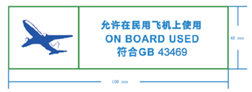 |  |
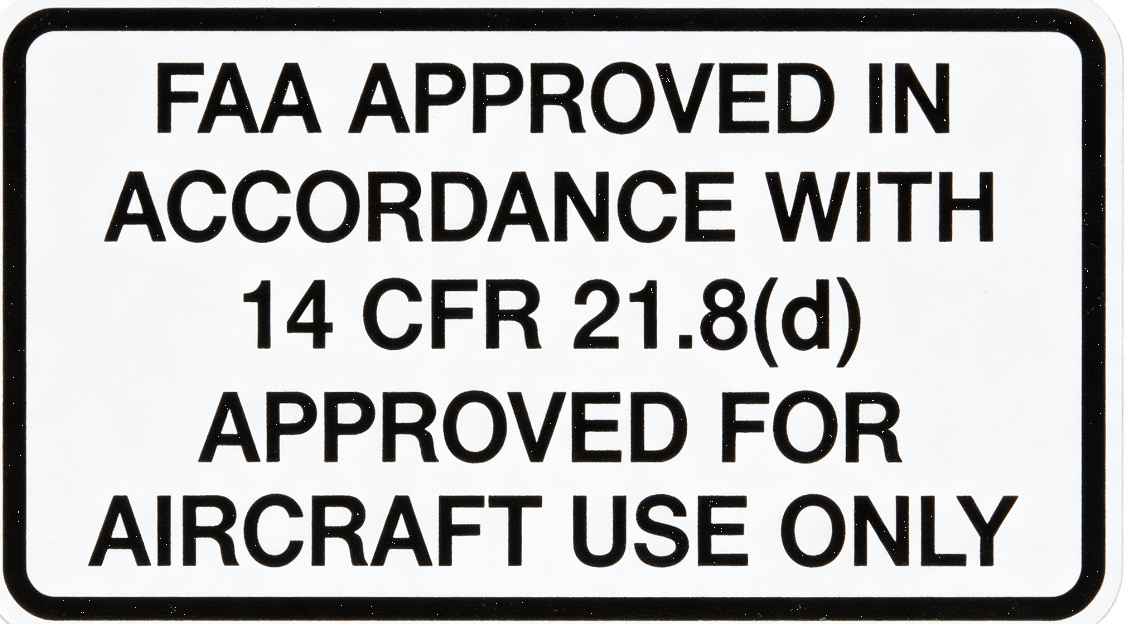 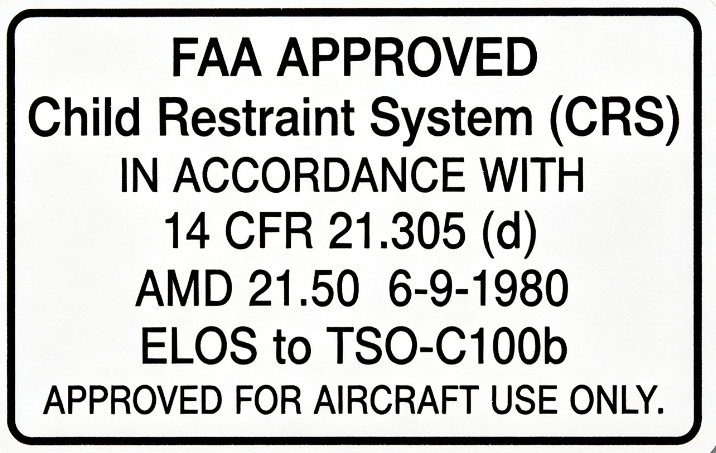 | 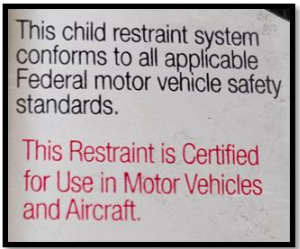 |
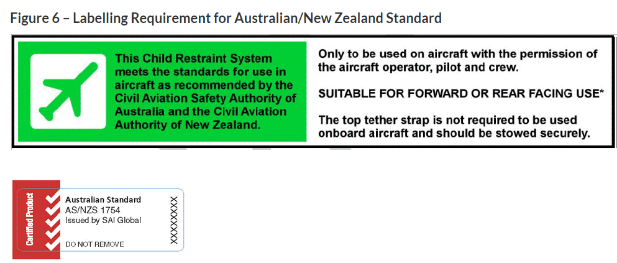 | 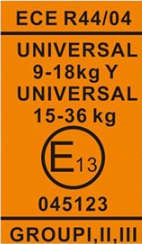 |
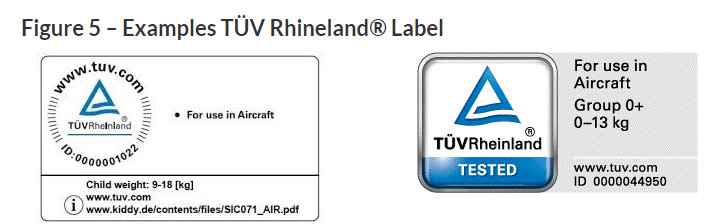 |  |
6. The child restraint device brought and used by passengers must be able to be firmly fixed on the seat, otherwise it shall be carried as checked baggage. For infant passengers without required child restraint devices who cannot be held by an adult, Spring Airlines will not accept them for the sake of safety.
3. Instructions on the Carriage of Unaccompanied Minors
Unaccompanied minors (UMs) refer to minors between 5 and 12 years old who travel by air without being accompanied by an adult over 18 years old with capacity for civil conduct.
In order to ensure that the children entrusted to Spring Airlines can receive timely and necessary services in the air and on the ground, ticket purchasers who need UM services should pay attention to the following:
1. Unaccompanied minors shall purchase tickets at the child fare.
2. Spring Airlines does not accept minors under 5 years old who travel alone.
3. Spring Airlines does not accept hearing and speech impaired or sight impaired minors under 12 years old who travel alone.
4. For the sake of safety, Spring Airlines limits the number of unaccompanied minors on each flight. Therefore, the UM application shall be submitted 24 hours prior to flight departure, and the unaccompanied minors can only be accepted for carriage after being agreed by Spring Airlines.
5. When booking seat for unaccompanied minors, it is necessary to fill in the "Unaccompanied Minor Application".
6. The parents or guardians of unaccompanied minors need to escort them to the boarding area and arrange personnel to meet and take care of them at the disembarking area. In order to ensure the smooth air travel of unaccompanied minors, it is recommended that the persons seeing them off remain at the airport until 30 minutes after the flight takes off.
7. After the confirmation of the UM service, if you need to change the flight or date, or cancel the service, you must contact 95524 to complete the change 24 hours prior to flight departure. If you still need this service after ticket changes, please go through the service procedures again according to the application process.
4. Instructions on the Carriage of Pregnant Passengers
Due to the high-altitude hypoxia caused by flying, Spring Airlines recommends that "expectant mothers" consult an obstetrician about whether they are fit to fly in view of their own physical conditions before planning a travel. In order to fully ensure the safety and health of you and your baby, Spring Airlines has the following regulations for pregnant women taking flights. We hope you can understand them in detail:
1. When booking seats and boarding, pregnant women must provide copies of continuous medical records indicating pregnancy, copies of maternal health manuals (large cards) stamped by hospitals, gestational age certificates signed (stamped) and sealed by doctors, B-ultrasound sheets and other examination materials, electronic examination reports on hospital APPs, and other materials issued by regular medical institutions that indicate the gestational age. Spring Airlines will judge whether to accept carriage based on them;
2. Pregnant women under 32 weeks of gestation will be treated as ordinary passengers unless they have been diagnosed as unfit to fly;
3. Pregnant women between 32 weeks and 35 weeks of gestation need to fill in the "Special Passenger Travel Application" and provide a medical clearance for flight (medical certificate or diagnosis certificate) stamped by a medical institution at or above the district/county level and signed by a doctor within 72 hours prior to flight departure. Such medical certificate or diagnosis certificate shall include the passenger's name, age, gestational week, estimated due date (EDD), and no uncomfortable symptoms such as pregnancy complications.
4. For the sake of the safety and health of passengers, Spring Airlines cannot carry pregnant women who are beyond 35 weeks of gestation, are within 4 weeks of EDD, have a close but inaccurate EDD, or gave birth no more than 7 days ago.
5. Instructions on the Carriage of Aged Passengers
1. Aged passengers refer to passengers who are 60 years old or above on the date of flight and require special care. Aircraft fly at high altitudes where the oxygen in the air is relatively lower and the air pressure is reduced. The aged may not be able to bear such loads due to their physical conditions. For the sake of your safety and health, Spring Airlines recommends that you consult a medical professional before taking a flight to ensure that your physical condition is suitable for air travel.
2. Aged passengers suffering coronary heart disease, hypertension, diabetes and other cardiovascular and cerebrovascular diseases, asthma and other diseases unfit for flying are generally not recommended for air travel. If you are aware of the above-mentioned conditions but still need to take a flight, please provide a "Diagnosis Certificate" indicating fitness to fly issued by a medical institution at or above the district/county level, otherwise Spring Airlines may refuse carriage as appropriate. Aged passengers with the above-mentioned diseases shall bear full responsibility for any consequences arising from concealing their conditions or failing to make necessary preparations (e.g., bringing medication) during the flight, and the airline may be legally relieved or even exempted from liability for compensation.
3. Aged passengers who are physically weak, unable to take care of themselves, and need a wheelchair for mobility should be regarded as sick passengers. When such passengers apply for a flight, they need to be accompanied by an adult, provide a "Diagnosis Certificate" indicating fitness to fly issued by a medical institution at or above the district/county level, and fill in the "Special Passenger Travel Application" before Spring Airlines can accept carriage; If there is no accompanying healthy adult, Spring Airlines has the right to refuse carriage, and all relevant losses caused by possible itinerary delays or interruptions shall be borne by the passengers themselves.
4. We recommend that aged passengers over 70 years old travel with a healthy adult to meet unexpected needs.
6. Instructions on the Carriage of Disabled Passengers
1. Carriage regulations
(1) For the sake of safety, the number of unaccompanied disabled passengers who need assistance during the flight (including disabled passengers using wheelchairs, disabled passengers with severe lower limb disabilities but not wearing prostheses, sight impaired passengers, disabled passengers with service dogs, and disabled passengers with severe intellectual or mental impairments who are unable to understand the instructions of the crew on board) that can be accepted on each flight segment shall not exceed 4 for A320 aircraft and 6 for A321 aircraft. When the number of disabled passengers exceeds the above limits, the number of accompanying persons shall be increased at a ratio of 1:1, but the number of disabled passengers shall not exceed 8 for A320 aircraft and 12 for A321 aircraft at most.
(2) The accompanying person shall book the same flight as the disabled passenger and buy tickets. Spring Airlines will ensure that in case of special circumstances (e.g. overbooking), at least one accompanying person will travel on the same aircraft with the disabled person who meets the conditions for flying. Accompanying persons shall be able to take care of disabled persons during the journey and assist them in evacuating in case of emergency.
(3) For disabled passengers under 12 years old who travel alone without being accompanied by a person over 18 years old with full capacity for civil conduct, the carriage regulations for unaccompanied minors shall apply (except for hearing and speech impaired or sight impaired minors). For convenience and necessary care, disabled passengers under the age of 16 are recommended to be accompanied by an adult over the age of 18 with full capacity for civil conduct when taking a flight.
(4) Eligible disabled passengers and their service dogs shall undergo screening like other passengers. Please empty the carry-on colostomy pouch before screening.
2. Barrier-free services and assistance
(1) Airport assistance
Boarding and disembarking assistance
Our staff will assist you in boarding, disembarking and transferring.
Passenger seat arrangement
We will make every effort to accommodate your seat arrangement requests. It is our responsibility to provide you with a seat that corresponds to your ticket class in advance. We will give you extra care in the following situations:
(a) Passengers traveling with accompanying persons can be arranged in adjacent seats.
(b) Passengers traveling with service dogs can be arranged in any eligible seat without affecting other passengers.
(c) Passengers with limited mobility can be arranged in any eligible seat and, upon request, can be arranged in a seat on the side convenient for their mobility.
(d) You can also choose the seat you need through our online seat selection function.
(2) In-flight special services
Movable aisle armrests
Some of our aircraft models are equipped with movable aisle armrests to facilitate easier access for passengers using cabin wheelchairs. The number and location of seats with movable aisle armrests vary depending on the aircraft model.
If the armrest of your seat is not movable, the crew will be happy to check if alternative seats are available on the aircraft.
In-cabin storage of assistive devices
You can also bring the assistive devices listed in the following table into the cabin as carry-on items:
Category | Assistive devices |
Physical disability | Crutches, prostheses, folding wheelchairs |
Hearing disability | Cochlear implants, hearing aids |
Visual disability | Tactile sticks, typoscopes, glasses |
Notes: 1. If there are storage facilities and space in the cabin, the principle of "first-come, first-served" shall apply, and the storage of assistive devices shall comply with relevant regulations of the CAAC on security and air transportation of dangerous goods; 2. If there are no storage facilities or space in the cabin, the assistive devices shall be checked in for free; 3. Disabled passengers can check in one assistive device not listed in this table for free. | |
Lavatory
Our aircraft are not equipped with accessible lavatories, but all aircraft provide lavatories with single-panel doors and additional handrails. There are no special narrow wheelchairs on board. If you are able to walk, our crew can assist you in entering and exiting the lavatory, but cannot provide assistance inside it.
In-flight assistance
All our flight attendants have high service qualities to ensure your safe and comfortable journey. They can assist you in entering and exiting the lavatory, storing or retrieving your carry-on baggage, introducing the food on the tray, opening the packaging, etc.
However, flight attendants do not help passengers with dining, personal hygiene, using the lavatory, or in-seat elimination, nor can they provide medical services such as injection. If you do not have independent mobility, flight attendants cannot lift or move you. If you need such care, please travel with someone who can provide it during the flight.
3. Notes for the carriage of disabled passengers
● Sight impaired passengers
Sight impaired passengers refer to adult disabled passengers losing the sight of both eyes. They do not refer to passengers with eye diseases, who should be treated as sick passengers. The following precautions must be understood by ticket bookers and fully informed to boarding passengers:
(1) Sight impaired passengers accompanied by adults over 18 years old with full capacity for civil conduct will be accepted for carriage by Spring Airlines as regular passengers;
(2) Sight impaired passengers between 12 and 16 years old as of the start date of the journey shall be subject to the following regulations:
(a) Sight impaired passengers between 12 and 16 years old shall be accompanied by adults over 18 years old.
(b) If a sight impaired passenger between 12 and 16 years old who originally had a confirmed seat needs to fly alone after itinerary adjustment due to reasons not attributable to him/her, he/she can be accepted for carriage as an unaccompanied sight impaired passenger.
(c) Passengers unaccompanied by adults or guide dogs (referred to as unaccompanied sight impaired passengers) refer to sight impaired passengers who can ambulate and take care of themselves, and do not need help from others when eating.
(d) Unaccompanied sight impaired passengers taking a flight shall submit the application at the latest 24 (inclusive) hours prior to flight departure.
(e) Unaccompanied sight impaired passengers taking a flight shall be escorted by their family members or guardians to the boarding area of the origin, and be met by their family members or guardians at the disembarking area of the destination.
(f) The related carrier's approval shall be obtained for connecting flight.
● Hearing and speech impaired passengers
Hearing and speech impaired passengers refer to disabled passengers with bilateral hearing impairment and/or speech impairment. Passengers with ear diseases shall be treated as sick passengers. Hearing and speech impaired passengers over 16 years old without hearing dogs will be accepted for carriage by Spring Airlines as regular passengers.
Hearing and speech impaired passengers between 12 and 16 years old as of the start date of the journey shall be subject to the following regulations:
(a) Hearing and speech impaired passengers between 12 and 16 years old shall be accompanied by adults over 18 years old.
(b) If a hearing and speech impaired passenger between 12 and 16 years old who originally had a confirmed seat needs to fly alone after itinerary adjustment due to reasons not attributable to him/her, he/she can be accepted for carriage as an unaccompanied sight impaired passenger. Unaccompanied hearing and speech impaired passengers under 16 years old taking a flight shall submit the application at the latest 24 (inclusive) hours prior to flight departure.
● Passengers with limited mobility
The following precautions must be understood by ticket bookers and fully informed to boarding passengers:
(1) Assistive devices needed by disabled passengers during the journey (e.g. crutches, prostheses, white canes) can be carried into the cabin by them and handed over to the flight attendants for storage if there are storage facilities and space in the cabin.
(2) If there are no storage facilities or space in the cabin, assistive devices (e.g. folding wheelchairs) will be checked in for free and do not occupy the passenger's free baggage allowance.
(3) Electric wheelchairs are powered by batteries, and the storage batteries or lithium batteries used in them have certain risks during transportation. Electric wheelchairs shall be checked in, and the check-in procedures shall be completed 2 hours before the cutoff time. When an electric wheelchair is checked, it must comply with the requirements for battery-powered wheelchairs or mobility aids in Spring Airlines' dangerous goods transportation terms.
(4) Passengers who need wheelchair service should apply at the latest 12 hours prior to flight departure.
● Passengers with Intellectual or mental disabilities
The following precautions must be understood by ticket bookers and fully informed to boarding passengers:
(1) Please prepare a "Medical Diagnosis Certificate" for fitness to fly issued by a hospital at or above the district/county level before taking the flight. The issuance date of the "Medical Diagnosis Certificate" shall not be earlier than 10 days before the flight date (excluding the departure date).
(2) For convenience and necessary care, it is recommended that passengers with Intellectual or mental disabilities be accompanied by their family members or medical staff.
● Passengers with service dogs
Service dogs refer to special dogs that provide assistance for the life and work of disabled persons, including hearing dogs and guide dogs. Mental aid dogs are temporarily not included in the scope of service dogs acceptable for carriage due to reasons such as certification. Service dogs for personal use carried by disabled passengers during the journey can be brought into the cabin for free carriage. The following precautions must be understood by ticket bookers and fully informed to boarding passengers:
(1) Each passenger can carry no more than 1 service dog, and the total number of service dogs on each flight segment shall not exceed 4.
(2) Disabled passengers who need to carry service dogs for travel shall apply through "Spring Airlines Official Website/APP/Mini-Program - Service Center - Special Passenger Service Application" at latest 24 hours (inclusive) prior to flight departure.
(3) When purchasing tickets and taking the flight, please present the disability certificate, the service dog's identity certificate and quarantine certificate to us. Please carry the service dog to the airport at least 120 minutes before the scheduled departure time of the flight.
(4) If the domestic transportation conditions are met, the service dog's certificate documents and the "Quarantine Certificate" issued by the quarantine inspection unit shall be provided.
(5) If the international transportation conditions are met, the following certificates shall be provided:
(a) "Quarantine Certificate" and "Rabies Immunization Certificate" issued by the national animal and plant quarantine authority;
(b) Entry-exit or transit permit;
(c) Other documents required by the country of entry or transit (for specific requirements, refer to the detailed regulations of the relevant country).
(6) The food and utensils for service dogs brought into the cabin do not occupy the free baggage allowance.
(7) Service dogs to be brought into the cabin shall be tied with a leash before boarding, and shall not occupy seats or run around freely in the cabin. Disabled persons may not be required to muzzle their service dogs when consent is obtained from passengers within the service dogs' activity area.
(8) Disabled passengers shall bear full responsibility for the service dogs they carry. Spring Airlines shall not be liable for any injury, illness or death of the service dogs during transportation, unless caused by the Company itself.
7. Instructions on the Carriage of Injured and Sick Passengers
Injured and sick passengers refer to passengers who need care and/or medical assistance when boarding and disembarking, during the flight (including emergency evacuation) and in the airport ground service process due to illness or injury. We hope that the ticket booker will first fully understand the corresponding carriage regulations before purchasing tickets for injured and sick passengers.
1. In any of the following circumstances, carriage will be refused except for saving lives and with special arrangements approved by Spring Airlines. We recommend that you choose other modes of transportation to better ensure your safety and health.
(1) Passengers suffering infectious diseases, including those whose infectious diseases pose a direct threat to the health of other passengers or crew members, or those whose infectious diseases are within the period of mandatory quarantine specified by the state and the destination country (for international routes).
Note: Infectious diseases such as severe acute respiratory syndrome (SARS) which are easily transmissible in the cabin and can cause serious consequences belong to direct threats; diseases such as common cold which are easily transmissible in the cabin but do not lead to serious health consequences, and diseases such as AIDS which have very serious health consequences but are not easily transmissible in the cabin, do not belong to direct threats;
(2) Psychiatric patients in a state of onset who may cause harm to other passengers or themselves, or endanger aviation safety;
(3) Patients with severe or critical heart diseases, such as severe heart failure, cyanosis symptoms, or myocardial infarction (suffering myocardial infarction within 6 weeks prior to travel);
(4) Patients with severe otitis media accompanied by eustachian tube blockage;
(5) Patients who suffered spontaneous pneumothorax in the past half year, or patients with neurological conditions who have recently undergone pneumothorax surgery (except those with a doctor's diagnosis certificate as the evidence of fitness to fly);
(6) Patients with large mediastinal tumors, giant hernias, and intestinal obstruction;
(7) Patients with increased intracranial pressure from head injuries and skull fractures;
(8) Patients with mandibular fractures recently treated with wire fixation;
(9) Patients who suffered poliomyelitis in the past 30 days, or patients with bulbar poliomyelitis;
(10) Patients with severe hemoptysis, hematemesis, vomiting, or groaning symptoms;
(11) Passengers who, due to physical or medical conditions (including neurological or mental conditions), cannot take care of themselves during travel without special assistance;
(12) Patients whose condition suddenly worsens or deteriorates during check-in or boarding;
(13) Those who have recently suffered serious trauma or undergone major surgery with wounds not yet fully healed;
(14) Other patients with diseases that make them unfit to fly.
2. Due to the complexity and diversity of diseases, if a disease is not listed in the above clauses and it is uncertain whether a passenger is suitable for air travel, the passenger shall be required to provide a medical certificate or diagnosis certificate of fitness to fly issued by a medical institution.
a. The passenger's condition and diagnosis results shall be documented by a medical institution at or above the district/county level or equivalent, signed by a doctor and stamped by the medical institution.
b. The certificate shall include the conditions necessary to prevent the spread of the disease or infectious disease, and it is valid only if issued within 96 hours prior to flight departure. For serious conditions, the certificate shall be issued within 48 hours prior to flight departure. The medical certificate required for disabled persons to indicate that they can safely complete their journey without additional medical assistance during air travel shall be issued within 10 days before the date of departure.
3. Injured and sick passengers requiring wheelchairs
(1) On Airbus A320/A321 aircraft, the total number of WCHC or unaccompanied WCHS passengers is limited to 2. Passengers requiring wheelchair service shall apply at the latest 12 hours prior to flight departure.
(2) Passengers who are physically fit to fly but require wheelchair due to limited mobility may apply for wheelchair service. Wheelchair service includes the following three categories:
a. WCHR (Wheelchair—R for Ramp)—passenger can ascend/descend steps and make own way to/from cabin seat but requires wheelchair for distance to/from aircraft, i.e. across ramp, finger dock or to mobile lounge as applicable.
b. WCHS (Wheelchair—S for Steps)—passenger cannot ascend/descend steps, but is able to make own way to/from cabin seat; requires wheelchair for distance to/from aircraft or mobile lounge and must be carried up/down steps.
c. WCHC (Wheelchair—C for Cabin Seat)—passenger completely immobile; requires wheelchair to/from aircraft/mobile lounge and must be carried up/down steps and to/from cabin seat.
(3) Folding wheelchairs, electric wheelchairs
a. Folding wheelchairs and electric wheelchairs brought by passengers must be checked in.
b. Folding wheelchairs and electric wheelchairs used as walking aids by passengers with limited mobility can be transported free of charge and not counted in the free baggage allowance.
c. Electric wheelchairs are powered by batteries, and the storage batteries or lithium batteries used in them have certain risks during transportation. Electric wheelchairs shall be checked in, and the check-in procedures shall be completed two hours before the cutoff time. If such time limit cannot be met, after passing the dangerous goods compliance inspection, it is necessary to complete the handover no later than the check-in deadline for special passengers on this flight. When checking in electric wheelchairs, they must comply with Spring Airlines’ requirements for battery-powered wheelchairs or mobility aids.
4. Stretcher passengers/passengers using oxygen
Stretcher passengers refer to passengers who need to use a stretcher for lying low and fastening them on board. Passengers using oxygen are passengers who need to use medical oxygen as scheduled on board.
(1) Stretcher passengers
a. Only one stretcher passenger is permitted on 180-seat aircraft of Airbus A320 model. Stretcher passengers are not permitted on 186-seat aircraft of the A320 model and aircraft of the A321 model for the time being.
b. Passengers in shock/coma are not accepted for carriage, and only one stretcher passenger is permitted on the same flight.
c. Except under special circumstances, stretcher passengers are not permitted on flights with VVIPs.
d. As a general rule, connecting flight arrangements are not available for stretcher passengers.
e. Except under special circumstances, Spring Airlines only accept stretcher passengers on domestic flights originating from our bases, including Hongqiao, Pudong, Shenyang, Shijiazhuang, Shenzhen, and other domestic bases where the company's maintenance personnel have been stationed.
f. Except under special circumstances, Spring Airlines does not accept stretcher passengers who need medical oxygen on board. Under special circumstances, if stretcher passengers need to use medical oxygen devices, only the equipment provided by Spring Airlines can be used.
g. Only stretchers provided by Spring Airlines can be used on board.
h. Passengers requiring stretcher service should apply at the latest 72 hours prior to flight departure.
(2) Passengers using oxygen
Except for emergency rescue, Spring Airlines does not accept passengers who need medical oxygen on board. In case of emergency rescue, if passengers request to use medical oxygen devices, only the equipment provided by Spring Airlines can be used.
(3) Ticket purchase requirements
When purchasing tickets for stretcher passengers/passengers using oxygen, a medical certificate or diagnosis certificate of fitness to fly issued by a hospital at or above the district/county level shall be presented. The certificate shall clearly state the passenger's condition and diagnosis results, and will be valid only when signed by a doctor and stamped by the medical institution. The medical certificate for passengers using oxygen shall also specifically indicate the maximum oxygen volume and maximum oxygen flow required per hour at the pressure altitude corresponding to the cabin pressure of the aircraft during normal flight.
Instructions on the Carriage of Special Passengers (International)
1. General
The number of special passengers who are not persons with disabilities is limited to five per flight segment on A320/A321 (wheelchair passengers). Due to limited safety and passenger service support capabilities, Spring Airlines temporarily cannot accept special passengers such as stretcher passengers and unaccompanied minors on international and Hong Kong, Macao and Taiwan flights. We appreciate your understanding.
Please note that Spring Airlines always reserves the right to authorize airport staff to judge and refuse passengers who are not suitable for air travel on site. All relevant losses caused by possible itinerary delays or interruptions shall be borne by the passengers themselves. Given that the exercise of such on-site right is a reasonable risk avoidance act to avoid potential irreparable damage to passengers, unless relevant staff causes your losses (if any, and confirmed by judicial decision) by intentional or gross negligence, in any case the damage compensation liability of Spring Airlines and its agents for exercising the refusal-of-carriage right shall be based on fault and limited to the refund of the ticket price, and Spring Airlines shall not be liable for any claims for spiritual damage compensation or indirect losses. If you do not agree to this limitation of liability, please do not purchase tickets.
In case of emergency, Spring Airlines will arrange assistants (including accompanying persons) to provide safety assistance for passengers who need help to move quickly to the exit.
The following special passengers who meet the regulations can take international and regional flights (Hong Kong, Macao and Taiwan flights) operated by Spring Airlines. Other special passengers who need to purchase tickets for Spring Airlines' international and regional flights must consult the online customer service before purchasing tickets.
2. Instructions on the Carriage of Infant Passengers
An infant refers to one who is more than 14 days old but less than 2 years old. For the sake of their safety and health, Spring Airlines cannot carry infants less than 14 days old and premature infants less than 90 days old.
Passengers traveling with infants should pay attention to the following:
1. Passengers less than 2 years old on Spring Airlines flights are carried as infants and must be accompanied by adult passengers over 18 years of age.
2. When an adult passenger travels with an infant not occupying a seat, the fare is charged according to the applicable fare published by Spring Airlines. We do not provide a separate seat and free baggage allowance for passengers with infant tickets.
3. Each adult may carry no more than 2 infants. When an adult passenger carries more than 1 infant, the excess infants shall purchase child tickets and occupy separate seats. Infants have no free baggage allowance, but one pushchair can be checked in free of charge; Seat-occupying infants have no free checked baggage allowance, but an additional car seat can be carried free of charge. Applications for seat-occupying infant services shall be submitted 12 hours before the scheduled departure time of the flight.
4. According to the number of infant life jackets and infant seat belts equipped on board, the total number of infants (including seat-occupying infants with child tickets) that can be accepted on flights operated by Spring Airlines' A320/A321 models shall not exceed 10. Please be sure to order infant tickets when ordering adult tickets.
5. Spring Airlines does not provide bassinets. Infants must be held by their accompanying adults using special seat belts or seated in child restraint devices approved by the CAAC. Passengers need to, by themselves, carry a child restraint device (car seat) with a width not exceeding 17" (43cm) for seat-occupying infants, which shall bear appropriate markings indicating that it can be used on aircraft (refer to the sample markings below), and ensure that the device can be properly fixed on the approved forward-facing seat, the infant can be properly fastened in the device, and the infant's weight does not exceed the weight limit specified by the device. During takeoff, landing and ground movement of the aircraft, booster-type child restraint devices, vest-type child restraint devices, harness-type child restraint devices and lap held child restraint devices shall not be used.
Markings permitted for child restraint devices used on aircraft (samples)
| |
| |
| |
| |
6. The child restraint device brought and used by passengers must be able to be firmly fixed on the seat, otherwise it shall be carried as checked baggage. For infant passengers without required child restraint devices who cannot be held by an adult, Spring Airlines will not accept them for the sake of safety.
3. Instructions on the Carriage of Pregnant Passengers
Due to the high-altitude hypoxia caused by flying, Spring Airlines recommends that "expectant mothers" consult an obstetrician about whether they are fit to fly in view of their own physical conditions before planning a travel. In order to fully ensure the safety and health of you and your baby, Spring Airlines has the following regulations for pregnant women taking flights. We hope you can understand them in detail:
1. When booking seats and boarding, pregnant women must provide copies of continuous medical records indicating pregnancy, copies of maternal health manuals (large cards) stamped by hospitals, gestational age certificates signed (stamped) and sealed by doctors, B-ultrasound sheets and other examination materials, electronic examination reports on hospital APPs, and other materials issued by regular medical institutions that indicate the gestational age. Spring Airlines will judge whether to accept carriage based on them;
2. Pregnant women under 32 weeks of gestation will be treated as ordinary passengers unless they have been diagnosed as unfit to fly;
3. Pregnant women between 32 weeks and 35 weeks of gestation need to fill in the "Special Passenger Travel Application" and provide a medical clearance for flight (medical certificate or diagnosis certificate) stamped by a medical institution at or above the district/county level and signed by a doctor within 72 hours prior to flight departure. Such medical certificate or diagnosis certificate shall include the passenger's name, age, gestational week, estimated due date (EDD), and no uncomfortable symptoms such as pregnancy complications.
4. For the sake of the safety and health of passengers, Spring Airlines cannot carry pregnant women who are beyond 35 weeks of gestation, are within 4 weeks of EDD, have a close but inaccurate EDD, or gave birth no more than 7 days ago.
5. Some countries or regions may have entry restrictions for pregnant women who are not local citizens. Since these regulations are subject to changes, we recommend that you confirm the specific requirements of the country (region) with the local consulate before purchasing tickets.
4. Instructions on the Carriage of Aged Passengers
1. Aged passengers refer to passengers who are 60 years old or above on the date of flight and require special care. Aircraft fly at high altitudes where the oxygen in the air is relatively lower and the air pressure is reduced. The aged may not be able to bear such loads due to their physical conditions. For the sake of your safety and health, Spring Airlines recommends that you consult a medical professional before taking a flight to ensure that your physical condition is suitable for air travel.
2. Aged passengers suffering coronary heart disease, hypertension, diabetes and other cardiovascular and cerebrovascular diseases, asthma and other diseases unfit for flying are generally not recommended for air travel. If you are aware of the above-mentioned conditions but still need to take a flight, please provide a "Diagnosis Certificate" indicating fitness to fly issued by a medical institution at or above the district/county level, otherwise Spring Airlines may refuse carriage as appropriate. Aged passengers with the above-mentioned diseases shall bear full responsibility for any consequences arising from concealing their conditions or failing to make necessary preparations (e.g., bringing medication) during the flight, and the airline may be legally relieved or even exempted from liability for compensation.
3. Aged passengers who are physically weak, unable to take care of themselves, and need a wheelchair for mobility should be regarded as sick passengers. When such passengers apply for a flight, they need to be accompanied by an adult, provide a "Diagnosis Certificate" indicating fitness to fly issued by a medical institution at or above the district/county level, and fill in the "Special Passenger Travel Application" before Spring Airlines can accept carriage; If there is no accompanying healthy adult, Spring Airlines has the right to refuse carriage, and all relevant losses caused by possible itinerary delays or interruptions shall be borne by the passengers themselves.
4. We recommend that aged passengers over 70 years old travel with a healthy adult to meet unexpected needs.
5. Instructions on the Carriage of Disabled Passengers
1. Carriage regulations
(1) For the sake of safety, the number of unaccompanied disabled passengers who need assistance during the flight (including disabled passengers using wheelchairs, disabled passengers with severe lower limb disabilities but not wearing prostheses, sight impaired passengers, disabled passengers with service dogs, and disabled passengers with severe intellectual or mental impairments who are unable to understand the instructions of the crew on board) that can be accepted on each flight segment shall not exceed 4 for A320 aircraft and 6 for A321 aircraft. When the number of disabled passengers exceeds the above limits, the number of accompanying persons shall be increased at a ratio of 1:1, but the number of disabled passengers shall not exceed 8 for A320 aircraft and 12 for A321 aircraft at most.
(2) The accompanying person shall book the same flight as the disabled passenger and buy tickets. Spring Airlines will ensure that in case of special circumstances (e.g. overbooking), at least one accompanying person will travel on the same aircraft with the disabled person who meets the conditions for flying. Accompanying persons shall be able to take care of disabled persons during the journey and assist them in evacuating in case of emergency.
(3) For convenience and necessary care, disabled passengers under the age of 16 are recommended to be accompanied by an adult over the age of 18 with full capacity for civil conduct when taking a flight.
(4) Eligible disabled passengers and their service dogs shall undergo screening like other passengers. Please empty the carry-on colostomy pouch before screening.
2. Barrier-free services and assistance
(1) Airport assistance
Boarding and disembarking assistance
Our staff will assist you in boarding, disembarking and transferring.
Passenger seat arrangement
We will make every effort to accommodate your seat arrangement requests. It is our responsibility to provide you with a seat that corresponds to your ticket class in advance. We will give you extra care in the following situations:
(a) Passengers traveling with accompanying persons can be arranged in adjacent seats.
(b) Passengers traveling with service dogs can be arranged in any eligible seat without affecting other passengers.
(c) Passengers with limited mobility can be arranged in any eligible seat and, upon request, can be arranged in a seat on the side convenient for their mobility.
(d) You can also choose the seat you need through our online seat selection function.
(2) In-flight special services
Movable aisle armrests
Some of our aircraft models are equipped with movable aisle armrests to facilitate easier access for passengers using cabin wheelchairs. The number and location of seats with movable aisle armrests vary depending on the aircraft model.
If the armrest of your seat is not movable, the crew will be happy to check if alternative seats are available on the aircraft.
In-cabin storage of assistive devices
You can also bring the assistive devices listed in the following table into the cabin as carry-on items:
Category | Assistive devices |
Physical disability | Crutches, prostheses, folding wheelchairs |
Hearing disability | Cochlear implants, hearing aids |
Visual disability | Tactile sticks, typoscopes, glasses |
Notes: 1. If there are storage facilities and space in the cabin, the principle of "first-come, first-served" shall apply, and the storage of assistive devices shall comply with relevant regulations of the CAAC on security and air transportation of dangerous goods; 2. If there are no storage facilities or space in the cabin, the assistive devices shall be checked in for free; 3. Disabled passengers can check in one assistive device not listed in this table for free. | |
Lavatory
Our aircraft are not equipped with accessible lavatories, but all aircraft provide lavatories with single-panel doors and additional handrails. There are no special narrow wheelchairs on board. If you are able to walk, our crew can assist you in entering and exiting the lavatory, but cannot provide assistance inside it.
In-flight assistance
All our flight attendants have high service qualities to ensure your safe and comfortable journey. They can assist you in entering and exiting the lavatory, storing or retrieving your carry-on baggage, introducing the food on the tray, opening the packaging, etc.
However, flight attendants do not help passengers with dining, personal hygiene, using the lavatory, or in-seat elimination, nor can they provide medical services such as injection. If you do not have independent mobility, flight attendants cannot lift or move you. If you need such care, please travel with someone who can provide it during the flight.
3. Notes for the carriage of disabled passengers
● Sight impaired passengers
Sight impaired passengers refer to adult disabled passengers losing the sight of both eyes. They do not refer to passengers with eye diseases, who should be treated as sick passengers. The following precautions must be understood by ticket bookers and fully informed to boarding passengers:
(1) Sight impaired passengers accompanied by adults over 18 years old with full capacity for civil conduct will be accepted for carriage by Spring Airlines as regular passengers;
(2) Sight impaired passengers between 12 and 16 years old as of the start date of the journey shall be subject to the following regulations:
(a) Sight impaired passengers between 12 and 16 years old shall be accompanied by adults over 18 years old.
(b) If a sight impaired passenger between 12 and 16 years old who originally had a confirmed seat needs to fly alone after itinerary adjustment due to reasons not attributable to him/her, he/she can be accepted for carriage as an unaccompanied sight impaired passenger.
(c) Passengers unaccompanied by adults or guide dogs (referred to as unaccompanied sight impaired passengers) refer to sight impaired passengers who can ambulate and take care of themselves, and do not need help from others when eating.
(d) Unaccompanied sight impaired passengers taking a flight shall submit the application at the latest 24 (inclusive) hours prior to flight departure.
(e) Unaccompanied sight impaired passengers taking a flight shall be escorted by their family members or guardians to the boarding area of the origin, and be met by their family members or guardians at the disembarking area of the destination.
(f) The related carrier's approval shall be obtained for connecting flight.
● Hearing and speech impaired passengers
Hearing and speech impaired passengers refer to disabled passengers with bilateral hearing impairment and/or speech impairment. Passengers with ear diseases shall be treated as sick passengers. Hearing and speech impaired passengers over 16 years old without hearing dogs will be accepted for carriage by Spring Airlines as regular passengers.
Hearing and speech impaired passengers between 12 and 16 years old as of the start date of the journey shall be subject to the following regulations:
(a) Hearing and speech impaired passengers between 12 and 16 years old shall be accompanied by adults over 18 years old.
(b) If a hearing and speech impaired passenger between 12 and 16 years old who originally had a confirmed seat needs to fly alone after itinerary adjustment due to reasons not attributable to him/her, he/she can be accepted for carriage as an unaccompanied sight impaired passenger. Unaccompanied hearing and speech impaired passengers under 16 years old taking a flight shall submit the application at the latest 24 (inclusive) hours prior to flight departure.
● Passengers with limited mobility
The following precautions must be understood by ticket bookers and fully informed to boarding passengers:
(1) Assistive devices needed by disabled passengers during the journey (e.g. crutches, prostheses, white canes) can be carried into the cabin by them and handed over to the flight attendants for storage if there are storage facilities and space in the cabin.
(2) If there are no storage facilities or space in the cabin, assistive devices (e.g. folding wheelchairs) will be checked in for free and do not occupy the passenger's free baggage allowance.
(3) Electric wheelchairs are powered by batteries, and the storage batteries or lithium batteries used in them have certain risks during transportation. Electric wheelchairs shall be checked in, and the check-in procedures shall be completed 2 hours before the cutoff time. When an electric wheelchair is checked, it must comply with the requirements for battery-powered wheelchairs or mobility aids in Spring Airlines' dangerous goods transportation terms.
(4) Passengers who need wheelchair service should apply at the latest 12 hours prior to flight departure.
● Passengers with Intellectual or mental disabilities
The following precautions must be understood by ticket bookers and fully informed to boarding passengers:
(1) Please prepare a "Medical Diagnosis Certificate" for fitness to fly issued by a hospital at or above the district/county level before taking the flight. The issuance date of the "Medical Diagnosis Certificate" shall not be earlier than 10 days before the flight date (excluding the departure date).
(2) For convenience and necessary care, it is recommended that passengers with Intellectual or mental disabilities be accompanied by their family members or medical staff.
● Passengers with service dogs
Service dogs refer to special dogs that provide assistance for the life and work of disabled persons, including hearing dogs and guide dogs. Mental aid dogs are temporarily not included in the scope of service dogs acceptable for carriage due to reasons such as certification. Service dogs for personal use carried by disabled passengers during the journey can be brought into the cabin for free carriage. The following precautions must be understood by ticket bookers and fully informed to boarding passengers:
(1) Each passenger can carry no more than 1 service dog, and the total number of service dogs on each flight segment shall not exceed 4.
(2) Disabled passengers traveling with service dogs shall apply through "Spring Airlines Official Website/APP/Mini-Program - Service Center - Special Passenger Service Application" at latest 24 hours (inclusive) prior to flight departure.
(3) When purchasing tickets and taking the flight, please present the disability certificate, the service dog's identity certificate and quarantine certificate to us. Please carry the service dog to the airport at least 120 minutes before the scheduled departure time of the flight.
(4) If the domestic transportation conditions are met, the service dog's certificate documents and the "Quarantine Certificate" issued by the quarantine inspection unit shall be provided.
(5) If the international transportation conditions are met, the following certificates shall be provided:
(a) "Quarantine Certificate" and "Rabies Immunization Certificate" issued by the national animal and plant quarantine authority;
(b) Entry-exit or transit permit;
(c) Other documents required by the country of entry or transit (for specific requirements, refer to the detailed regulations of the relevant country).
(6) The food and utensils for service dogs brought into the cabin do not occupy the free baggage allowance.
(7) Service dogs to be brought into the cabin shall be tied with a leash before boarding, and shall not occupy seats or run around freely in the cabin. Disabled persons may not be required to muzzle their service dogs when consent is obtained from passengers within the service dogs' activity area.
(8) Disabled passengers shall bear full responsibility for the service dogs they carry. Spring Airlines shall not be liable for any injury, illness or death of the service dogs during transportation, unless caused by the Company itself.
6. Instructions on the Carriage of Injured and Sick Passengers
Injured and sick passengers refer to passengers who need care and/or medical assistance when boarding and disembarking, during the flight (including emergency evacuation) and in the airport ground service process due to illness or injury. We hope that the ticket booker will first fully understand the corresponding carriage regulations before purchasing tickets for injured and sick passengers.
1. In any of the following circumstances, carriage will be refused except for saving lives and with special arrangements approved by Spring Airlines. We recommend that you choose other modes of transportation to better ensure your safety and health.
(1) Passengers suffering infectious diseases, including those whose infectious diseases pose a direct threat to the health of other passengers or crew members, or those whose infectious diseases are within the period of mandatory quarantine specified by the state and the destination country (for international routes).
Note: Infectious diseases such as severe acute respiratory syndrome (SARS) which are easily transmissible in the cabin and can cause serious consequences belong to direct threats; diseases such as common cold which are easily transmissible in the cabin but do not lead to serious health consequences, and diseases such as AIDS which have very serious health consequences but are not easily transmissible in the cabin, do not belong to direct threats;
(2) Psychiatric patients in a state of onset who may cause harm to other passengers or themselves, or endanger aviation safety;
(3) Patients with severe or critical heart diseases, such as severe heart failure, cyanosis symptoms, or myocardial infarction (suffering myocardial infarction within 6 weeks prior to travel);
(4) Patients with severe otitis media accompanied by eustachian tube blockage;
(5) Patients who suffered spontaneous pneumothorax in the past half year, or patients with neurological conditions who have recently undergone pneumothorax surgery (except those with a doctor's diagnosis certificate as the evidence of fitness to fly);
(6) Patients with large mediastinal tumors, giant hernias, and intestinal obstruction;
(7) Patients with increased intracranial pressure from head injuries and skull fractures;
(8) Patients with mandibular fractures recently treated with wire fixation;
(9) Patients who suffered poliomyelitis in the past 30 days, or patients with bulbar poliomyelitis;
(10) Patients with severe hemoptysis, hematemesis, vomiting, or groaning symptoms;
(11) Passengers who, due to physical or medical conditions (including neurological or mental conditions), cannot take care of themselves during travel without special assistance;
(12) Patients whose condition suddenly worsens or deteriorates during check-in or boarding;
(13) Those who have recently suffered serious trauma or undergone major surgery with wounds not yet fully healed;
(14) Other patients with diseases that make them unfit to fly.
2. Due to the complexity and diversity of diseases, if a disease is not listed in the above clauses and it is uncertain whether a passenger is suitable for air travel, the passenger shall be required to provide a medical certificate or diagnosis certificate of fitness to fly issued by a medical institution.
a. The passenger's condition and diagnosis results shall be documented by a medical institution at or above the district/county level or equivalent, signed by a doctor and stamped by the medical institution.
b. The certificate shall include the conditions necessary to prevent the spread of the disease or infectious disease, and it is valid only if issued within 96 hours prior to flight departure. For serious conditions, the certificate shall be issued within 48 hours prior to flight departure. The medical certificate required for disabled persons to indicate that they can safely complete their journey without additional medical assistance during air travel shall be issued within 10 days before the date of departure.
3. Injured and sick passengers requiring wheelchairs
(1) On Airbus A320/A321 aircraft, the total number of WCHC or unaccompanied WCHS passengers is limited to 2. Passengers requiring wheelchair service shall apply at the latest 12 hours prior to flight departure.
(2) Passengers who are physically fit to fly but require wheelchair due to limited mobility may apply for wheelchair service. Wheelchair service includes the following three categories:
a. WCHR (Wheelchair—R for Ramp)—passenger can ascend/descend steps and make own way to/from cabin seat but requires wheelchair for distance to/from aircraft, i.e. across ramp, finger dock or to mobile lounge as applicable.
b. WCHS (Wheelchair—S for Steps)—passenger cannot ascend/descend steps, but is able to make own way to/from cabin seat; requires wheelchair for distance to/from aircraft or mobile lounge and must be carried up/down steps.
c. WCHC (Wheelchair—C for Cabin Seat)—passenger completely immobile; requires wheelchair to/from aircraft/mobile lounge and must be carried up/down steps and to/from cabin seat.
(3) Folding wheelchairs, electric wheelchairs
a. Folding wheelchairs and electric wheelchairs brought by passengers must be checked in.
b. Folding wheelchairs and electric wheelchairs used as walking aids by passengers with limited mobility can be transported free of charge and not counted in the free baggage allowance.
c. Electric wheelchairs are powered by batteries, and the storage batteries or lithium batteries used in them have certain risks during transportation. Electric wheelchairs shall be checked in, and the check-in procedures shall be completed two hours before the cutoff time. If such time limit cannot be met, after passing the dangerous goods compliance inspection, it is necessary to complete the handover no later than the check-in deadline for special passengers on this flight. When checking in electric wheelchairs, they must comply with Spring Airlines’ requirements for battery-powered wheelchairs or mobility aids.
Spring Airlines(9C) Restrictions on the Carriage of Baggage
Items prohibited as carry-on or checked baggage
I. Firearms and other weapons (including major components) Devices capable of firing ammunition (including projectiles and other items) and causing serious personal injury, or items that may be mistaken for such devices | |
1. Military and official firearms | e.g. pistols, rifles, submachine guns, machine guns, riot guns |
2. Civilian firearms | e.g. airguns, hunting rifles, shooting sport guns, tranquilizer guns |
3. Other firearms | e.g. replica guns, prop guns, starting pistols, pellet guns, overseas firearms, and various illegally manufactured firearms |
4. Imitations of the above items | |
II. Explosive or combustible substances and devices Explosive or combustible devices (substances) that can cause serious personal injury or endanger aircraft safety, or items that may be mistaken for such devices (substances), mainly including: | |
1. Ammunition | e.g. bombs, grenades, flares, incendiary bombs, smoke bombs, signal detonators, tear gas grenades, gas bombs, bullets (blank cartridges, dummy rounds, lead bullets) |
2. Demolition equipment | e.g. explosives, detonators, fuses, detonators, safety fuses, detonating cords, blasting agents |
3. Pyrotechnic products | e.g. fireworks, smoke cakes, yellow smoke, firecrackers |
4. Imitations of the above items | |
III. Controlled knives Controlled tools that can cause personal injury or pose a greater hazard to aviation safety and transportation order, mainly including: | |
1. Military and police equipment | e.g. batons, stun guns, military or police daggers, handcuffs, thumbcuffs, fetters, tear gas sprayers |
2. Controlled knives | e.g. daggers (single-edged, double-edged or multi-edged sharp knives with a hilt, crossguard and blood groove, and a tip angle of less than 60 degrees), three-edged scrapers (mechanical processing tools with three blades), spring knives or switchblades with self-locking mechanisms (folding knives where the blade can be fixed and self-locked by the spring or latch in the hilt when extended or ejected), other similar single-edged, double-edged and three-edged sharp knives (various single-edged, double-edged and multi-edged knives with a tip angle of less than 60 degrees and a blade length of more than 150 mm), and other various single-edged, double-edged and multi-edged knives with a tip angle of more than 60 degrees and a blade length of more than 220 mm |
3. Other controlled tools stipulated by the State | e.g. crossbows |
IV. Dangerous Items Dangerous items that can cause personal injury or pose a greater hazard to aviation safety and transportation order, mainly including: | |
1. Compressed gases and liquefied gases | e.g. hydrogen, methane, ethane, butane, natural gas, ethylene, propylene, acetylene (dissolved in a medium), carbon monoxide, liquefied petroleum gas, freon, oxygen, carbon dioxide, water gas, lighter fuel and liquefied gas for lighters |
2. Spontaneously combustible items | e.g. yellow phosphorus, white phosphorus, nitrocellulose (including film), oiled paper and related products |
3. Items inflammable in contact with water | e.g. metallic potassium, sodium, lithium, calcium carbide, magnesium-aluminum powder |
4. Flammable liquids | e.g. gasoline, kerosene, diesel, benzene, ethanol, acetone, ether, paint, thinner, rosin oil, and products containing flammable solvents |
5. Flammable solids | e.g. red phosphorus, flash powder, solid alcohol, celluloid, blowing agents |
6. Oxidizers and organic peroxides | e.g. potassium permanganate, potassium chlorate, sodium peroxide, potassium peroxide, lead peroxide, peracetic acid, hydrogen peroxide |
7. Toxic substances | e.g. cyanides, arsenic, highly toxic pesticides, and other highly toxic chemicals |
8. Corrosive items | e.g. sulfuric acid, hydrochloric acid, nitric acid, sodium hydroxide, potassium hydroxide, mercury (quicksilver), liquid storage batteries |
V. Other items Other items that can cause personal injury or pose a greater hazard to aviation safety and transportation order, mainly including: | |
1. Infectious pathogens | e.g. hepatitis B virus, Bacillus anthracis, mycobacterium tuberculosis, HIV |
2. Fire starters (including various ignition devices) | e.g. lighters, matches, cigarette lighters, magnesium rods (flint) |
3. Lithium batteries | e.g. power banks with a rated energy exceeding 160Wh, lithium batteries (lithium batteries for electric wheelchairs are subject to separate regulations) |
4. Alcoholic beverages | e.g. alcoholic beverages with an alcohol content exceeding 70% by volume |
5. Others | e.g. strong magnetizers, items with a strong pungent odor or easy to cause passenger panic, and items of indeterminate nature that may be dangerous |
6. Radioactive materials | e.g. radioactive isotopes |
VI. Other items prohibited from being carried or transported as stipulated by national laws, administrative regulations and rules | |
Items prohibited as carry-on baggage but permitted as checked baggage
I. Sharp objects Such items have sharp edges or tips, and are made of metal or other materials, with sufficient strength to cause serious personal injury, mainly including: | |
1. Daily-use knives (blade length greater than 6 cm) | e.g. kitchen knives, fruit knives, scissors, art knives, paper cutters, etc. |
2. Special knives (no blade length restriction) | e.g. surgical knives, slaughter knives, carving knives, plane cutters, milling cutters, etc. |
3. Other knives | Knives, spears, swords, halberds, etc. used for martial arts and literary performances |
II. Blunt objects Such items do not have sharp edges or tips, and are made of metal or other materials, with sufficient strength to cause serious personal injury, mainly including: | |
Sticks (including expandable batons, nunchucks), baseball bats, billiard cues, cricket bats, hockey sticks, golf clubs, trekking poles, ski poles, brass knuckles (hand spikes), etc. | |
III. Others Other items that can cause personal injury or pose a greater hazard to aviation safety and transportation order, mainly including: | |
1. Tools | e.g. drills (including drill bits), chisels, awls, saws, bolt guns, nail guns, screwdrivers, crowbars, hammers, pliers, welding torches, wrenches, axes, hatchets (fire axes), vernier calipers, ice axes, ice picks |
2. Other items | e.g. darts, slingshots, bows, arrows, and buzzing self-defense devices, as well as stun guns, Mace gas, tear gas, pepper spray, acid spray, animal repellent spray, etc. that are not within the scope specified by the State |
Items permitted as carry-on or checked baggage with restrictions
1. Items permitted as carry-on baggage with restrictions but permitted as checked baggage | For international and regional flights, liquid items shall be carried in containers with a single capacity not exceeding 100 mL, and these containers shall be placed in a resealable transparent plastic bag with a maximum capacity of 1 L. Each passenger is only allowed to carry one such bag per trip, and the excess shall be checked as baggage. |
For domestic flights, liquid items are prohibited as carry-on baggage (except for cosmetics, toothpaste and shaving cream for personal use during air travel). Cosmetics for personal use during air travel must meet three conditions at the same time (limited to one piece per type, placed in a container with a single capacity not exceeding 100 mL, and subject to bottle opening inspection) before they can be carried onboard. Toothpaste and shaving cream are limited to one piece each and shall not exceed 100 g (mL). When passengers transfer from international and regional flights to domestic flights within the same security restricted area, their duty-free liquid items carried into the country must meet three conditions at the same time (presenting a shopping voucher, placed in a sealed and intact transparent plastic bag, and confirmed by screening) to remain as carry-on baggage. If they leave the security restricted area during the transfer, such items carried into the country must be checked as baggage. | |
Liquid dairy products necessary for infants during air travel and liquid medicines necessary for patients with diabetes or other diseases during air travel can only be carried onboard after being confirmed by screening. | |
Liquid items purchased or obtained by passengers in the security restricted area or on the aircraft can be carried before leaving the security restricted area. | |
2. Items prohibited as carry-on baggage but permitted as checked baggage with restrictions | Alcoholic beverages are prohibited as carry-on baggage, but permitted as checked baggage with the following restrictions: (1) Clearly labeled and in retail packaging, with each container not exceeding 5 L; (2) When the alcohol content ≤24% by volume, there is no quantity limit; (3) When the alcohol content >24% and ≤70% by volume, the quantity limit for each passenger is 5 L. |
3. Items prohibited as checked baggage but permitted as carry-on baggage with restrictions | Power banks and lithium batteries are prohibited as checked baggage, but permitted as carry-on baggage with the following restrictions (lithium batteries for electric wheelchairs are subject to separate regulations): Each passenger may carry a maximum of two mobile chargers (power banks) on a flight, each with a rated energy not exceeding 160Wh. Power banks with rated energy above 100Wh but not exceeding 160Wh require prior approval from the company. Carrying lithium batteries with rated energy exceeding 160Wh is strictly prohibited. |
4. Other items with carriage restrictions as stipulated by national laws, administrative regulations and rules. | |


Copyright ©1998-2023 All Rights Reserved. CH.com